
Top 15 Kitchen Flooring Options for Style and Durability

Introduction to Kitchen Flooring
The kitchen is one of the busiest rooms in any home. It is where meals are cooked, snacks are shared, and family and friends gather. Because of this, the floor in your kitchen has a big job to do. It needs to handle spills, heavy foot traffic, dropped pans, and daily cleaning. At the same time, you want it to look beautiful and match the style of your home. The good news is there are many kitchen flooring options that offer both style and durability. From tile and vinyl to hardwood and concrete, each material has its own strengths. Understanding these choices helps you create a kitchen that is both practical and stylish for years.
Check Also : The Top 15 Creative Kitchen Backsplash Designs to Transform Your Walls
Durability, Water Resistance, and Daily Use
Durability is one of the most important points for kitchen flooring. Think about how many times a day someone walks in and out, drops crumbs, spills water, or moves chairs. A durable floor will not scratch or wear down easily. Water resistance is also key, because kitchens often face splashes from the sink, boiling pots, or even leaking appliances. If the floor absorbs water, it can warp, crack, or grow mold. So, materials like tile, vinyl, and some stones do very well here. Also consider how the floor handles daily use: can it stand up to kids, pets, and constant cleaning without looking old too quickly? When you choose a durable and water-resistant floor, you protect both your kitchen and your investment.

Comfort, Safety, and Easy Cleaning
Kitchens are work zones, and you might stand for long periods while cooking or washing dishes. This is where comfort matters. Hard surfaces like stone and tile can be tough on your feet and back, while softer floors like cork or vinyl feel more gentle. Safety is another big concern. Floors should not be too slippery, especially when wet. Some finishes and textures offer better grip. Easy cleaning is the final piece of the puzzle. In a kitchen, spills and stains are normal, so you want a surface that can be wiped quickly without special cleaners. A good kitchen floor saves you time, reduces stress, and makes your daily routine smoother.
Option 1: Porcelain Tile Flooring
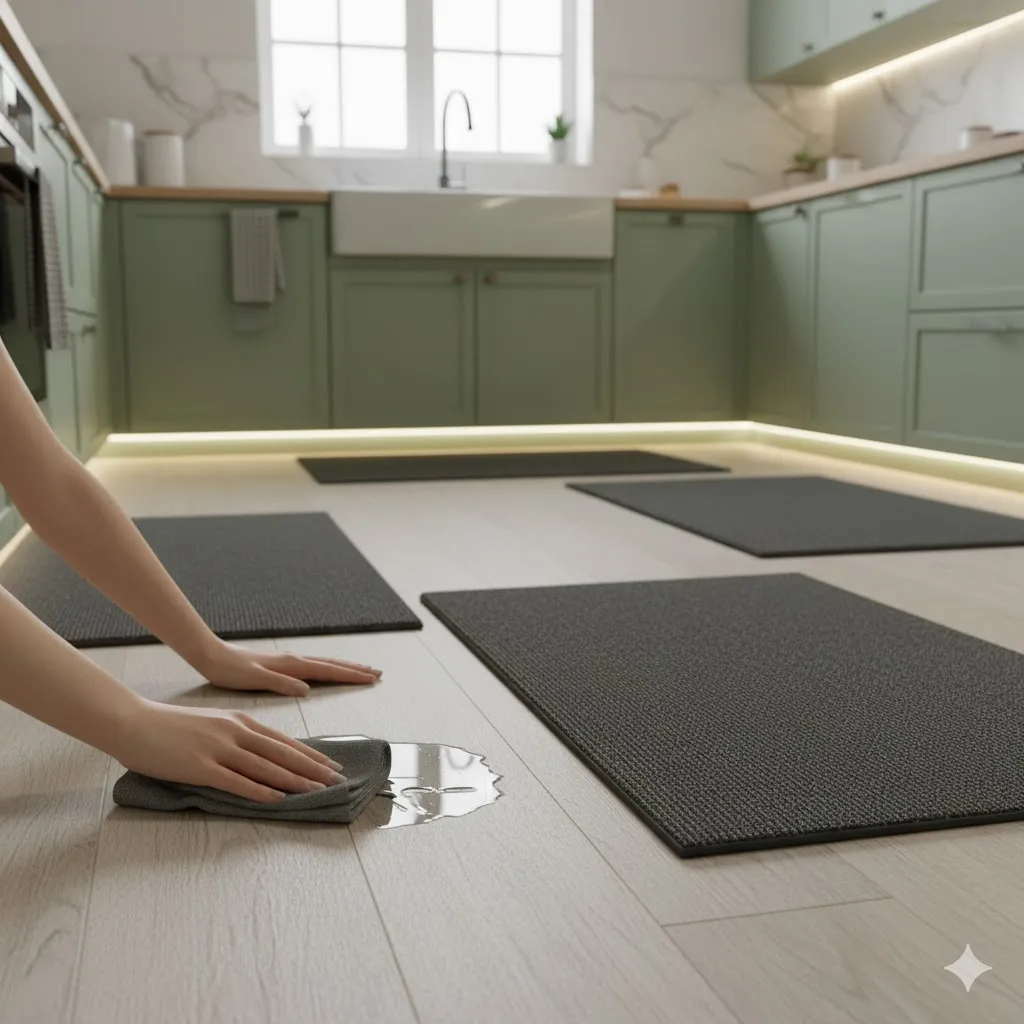
Porcelain tile is one of the most popular choices for kitchen floors, and for good reason. It is strong, dense, and highly resistant to water and stains. Porcelain is made at higher temperatures than regular ceramic tile, which makes it harder and more durable. This means it can handle heavy use, dropped utensils, and frequent cleaning without damage. It also comes in many styles, from stone looks to wood looks, so you can match almost any design. If you want a floor that can survive almost anything while still looking stylish, porcelain tile is a top choice.
Style Ideas for Porcelain in Modern Kitchens
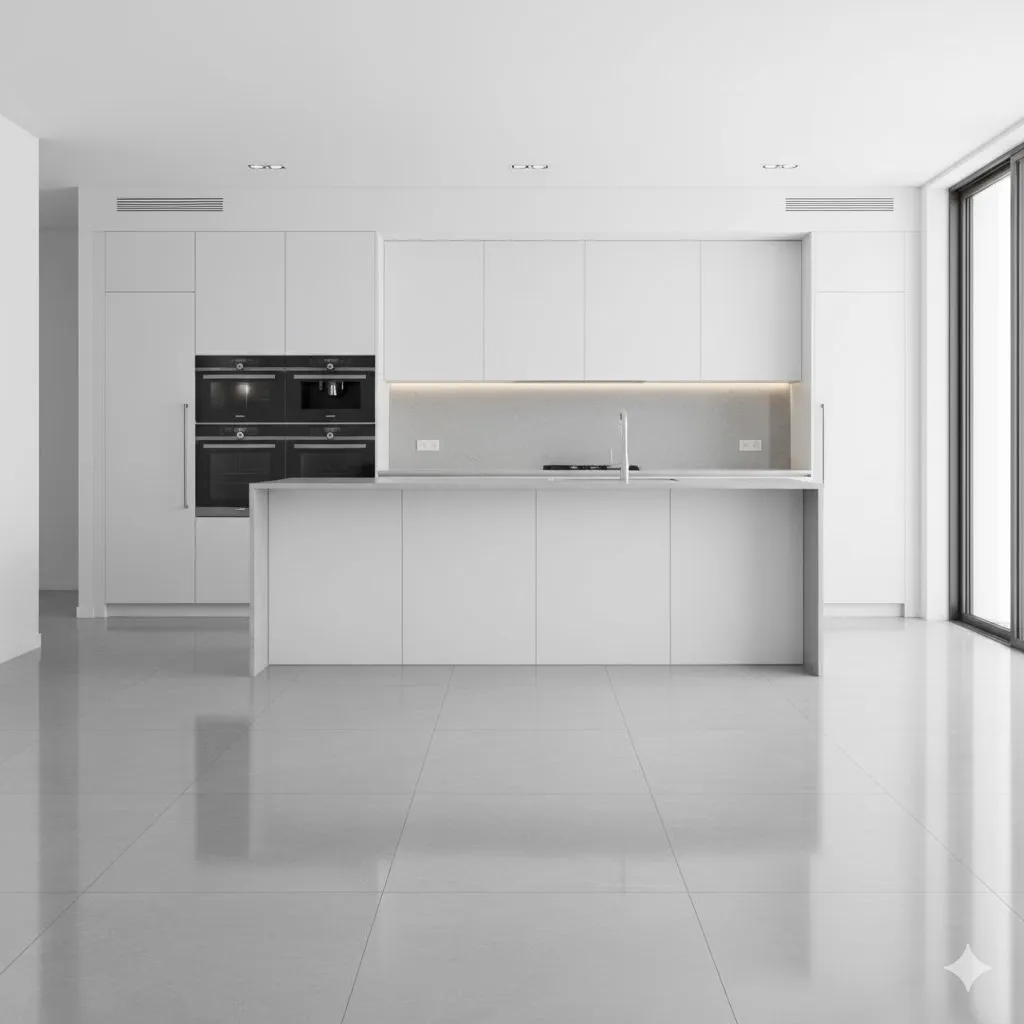
Porcelain tile is not just practical—it is also very stylish. You can use porcelain that looks like marble for a luxurious feel without the high cost or maintenance. Wood-look porcelain planks bring warmth to the kitchen while still offering the durability of tile. Large-format tiles can make a small kitchen feel bigger by reducing grout lines. You can also mix different shapes or colors to create patterns, such as herringbone or checkerboard designs. For a modern look, try soft gray tiles with thin grout lines. For a rustic style, choose warm tones with a textured surface. Porcelain gives you endless design options while staying strong and easy to care for.

Option 2: Ceramic Tile Flooring
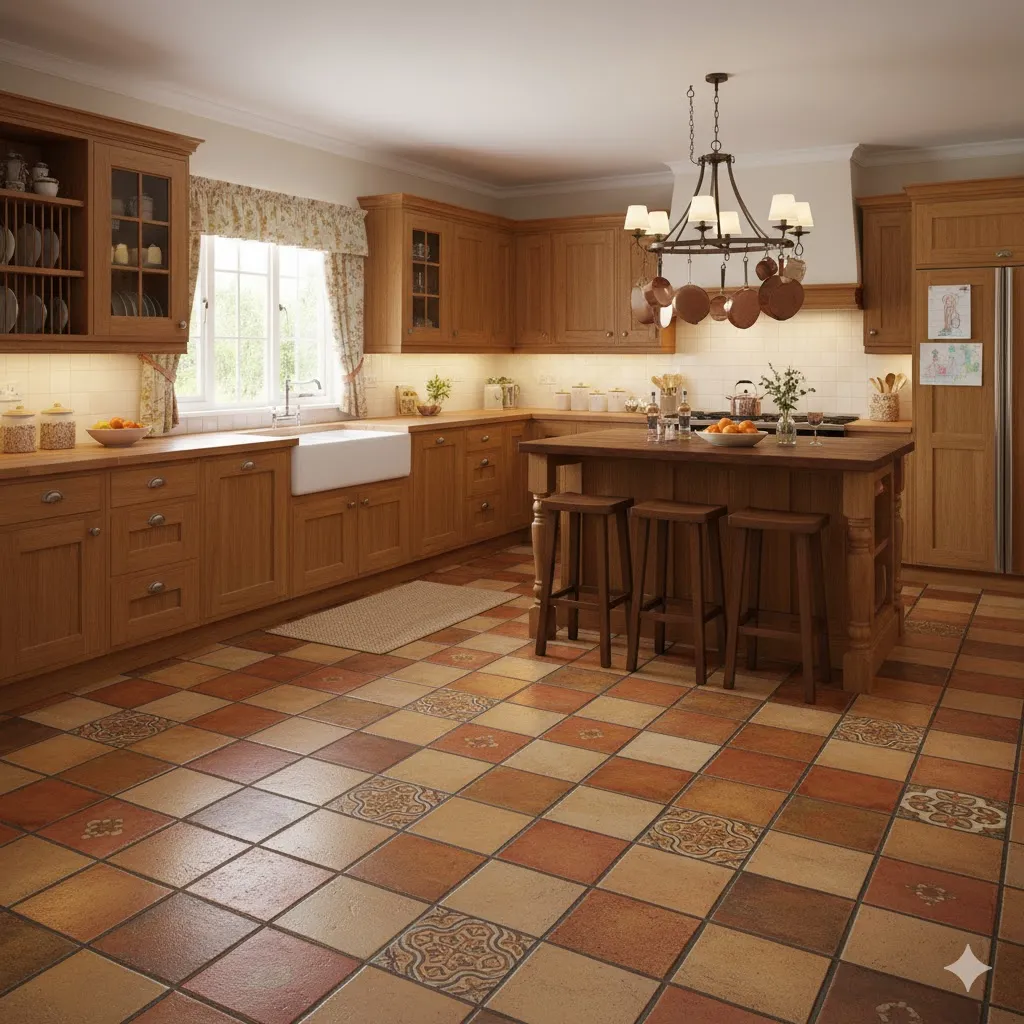
Ceramic tile is another classic kitchen flooring choice. It is similar to porcelain but usually a bit less dense and more budget-friendly. Ceramic tiles come in many colors, patterns, and sizes, which makes them very flexible for design. They are water-resistant and easy to clean, which is ideal for kitchens with lots of cooking and activity. You can use ceramic tiles to create bright, cheerful floors or calm, neutral spaces. Ceramic is perfect if you want a beautiful tiled floor without spending as much as porcelain.
Ceramic Tile Pros and Cons for Busy Kitchens
Ceramic tile offers many advantages. It is stain-resistant, easy to mop, and does not hold onto odors or bacteria. This makes it a hygienic option for a place where you handle food. Ceramic is widely available, so you can find many different looks in most home stores. However, it is a bit softer than porcelain, which means it may chip more easily if a heavy item falls on it. Like porcelain, ceramic can be hard and cold, and grout lines need regular cleaning to avoid staining. Still, for many families, ceramic gives a good balance of cost, style, and performance in a busy kitchen.
Option 3: Natural Stone Flooring
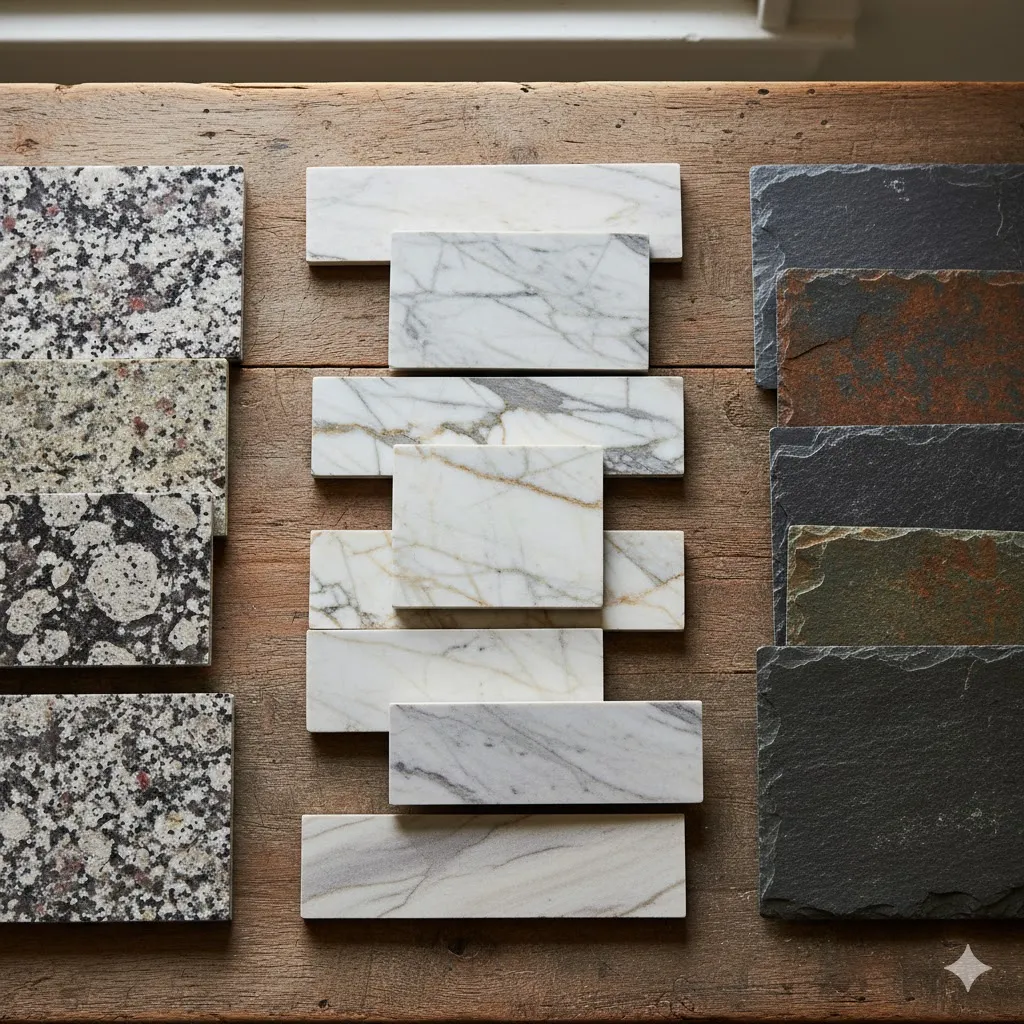
Natural stone brings a unique and luxurious feel to a kitchen. Each stone tile is slightly different, so your floor will never look exactly like anyone else’s. Common choices include granite, marble, slate, limestone, and travertine. Stone floors add character and can increase the value of your home. They go well with many styles, from rustic farmhouse to modern luxury. However, natural stone does need more care and may require sealing to protect it from stains and moisture.

Types of Stone: Granite, Marble, Slate, and More
Different stones have different looks and features. Granite is extremely hard and resistant to scratches, making it a great choice for high-traffic kitchens. Marble has a soft, elegant look with veins of color, but it can stain and scratch more easily, so it needs gentle care. Slate offers rich, earthy tones and a slightly textured surface that helps prevent slipping. Limestone and travertine have warm, natural colors and a softer, more relaxed look, but they are also more porous. Whatever stone you choose, sealing the floor regularly will help protect it. Stone floors feel cool, which can be nice in hot climates but may feel cold in winter without rugs or heating.
Option 4: Luxury Vinyl Plank (LVP) Flooring
Luxury vinyl plank, often called LVP, has become a favorite in modern kitchens. It is designed to look like wood or stone but is made from strong vinyl materials. LVP is waterproof or highly water-resistant, which is ideal for kitchens. It is also softer and warmer underfoot than tile or stone. This makes it comfortable for long cooking sessions. LVP is also quieter, which can be important in open-plan homes. If you want the look of wood without worrying as much about water and stains, LVP is a smart choice.

Benefits of LVP for Style and Durability
LVP offers a lot of style options. You can find planks that mimic oak, walnut, or even distressed wood. There are also stone-look patterns. Many LVP products have textured surfaces to feel more like real wood. In terms of durability, good-quality LVP resists scratches and dents and is very easy to clean with simple sweeping and mopping. It is also easier and faster to install than many other floors, and some types can be put down as floating floors over old surfaces. For families, pets, and busy kitchens, LVP offers a great mix of beauty, comfort, and toughness.

Option 5: Sheet Vinyl Flooring
Sheet vinyl is an older but still very useful flooring type for kitchens. Instead of planks or tiles, it comes in large rolls that are cut to fit your space. Because there are fewer seams, sheet vinyl offers excellent water resistance. It can even handle standing water better than many other types. This makes it great for homes where spills or leaks are more common. Sheet vinyl is also soft and quiet underfoot, which can make the kitchen feel more comfortable and welcoming.

Why Sheet Vinyl Works Well in Family Kitchens
For families with kids or pets, sheet vinyl can be a very practical option. It is budget-friendly and comes in many patterns, including stone, tile, and wood looks. Many modern sheet vinyl products are much better looking than older versions, with more realistic textures and colors. Cleaning is simple—most spills wipe right up without leaving marks. Because it’s softer, it can show dents from heavy furniture over time, and sharp objects may cut it. But if you want a simple, smooth, and water-resistant floor, sheet vinyl is a strong, family-friendly option.
Option 6: Laminate Flooring
Laminate flooring is made from layers of fiberboard topped with a photo layer and a protective coating. It is well-known for giving the appearance of real wood at a lower price. In the kitchen, laminate can look warm and stylish while staying relatively easy to install. However, not all laminate is water-resistant, so it’s important to choose a type made for kitchens and bathrooms if you want it to last.

Realistic Wood Looks on a Budget
One of the biggest benefits of laminate is how realistic the wood patterns can be. You can find designs that mimic oak, maple, pine, or even weathered barn wood. This gives your kitchen a cozy, inviting feel without paying for real hardwood. Laminate is usually easy to clean with a dry mop or slightly damp cloth. The main concern is water: if moisture gets into the seams, it can cause the boards to swell. Many newer laminate products are made to resist water better, so always check the rating. For homeowners who want wood style without hardwood prices, laminate can be a smart and stylish choice.
Option 7: Engineered Hardwood Flooring
Engineered hardwood is made from a top layer of real wood attached to layers of plywood or similar material underneath. This construction makes it more stable than solid wood, especially in rooms with changing temperatures and humidity, like kitchens. You still get the natural beauty of real wood, but with better resistance to warping. Engineered hardwood can be a good compromise between style and practicality in the kitchen.

Engineered Wood vs Solid Wood in the Kitchen
In a kitchen, engineered wood usually performs better than solid hardwood because it expands and contracts less with moisture. You can choose many species and finishes, from light and airy oak to deep, rich walnut. Some engineered floors can be refinished once or twice, depending on how thick the top wood layer is. While engineered hardwood still needs care—wiping spills quickly and avoiding standing water—it is a more flexible choice for this busy room compared to solid wood. If you love the warm, natural look of wood, engineered flooring gives you that style with fewer worries.
Option 8: Solid Hardwood Flooring
Solid hardwood brings timeless beauty to any kitchen. It is made from single pieces of wood and can be sanded and refinished many times. This means your floor can last for decades if cared for properly. Hardwood adds warmth, charm, and value to your home. Many people love the way wood floors connect the kitchen to nearby living or dining spaces, creating a smooth, open feel.

Keeping Hardwood Beautiful in a High-Traffic Kitchen
Hardwood needs more care in the kitchen than some other materials. Water is its main enemy. Spills should be wiped up quickly, and large leaks should be avoided if possible. Using rugs near the sink and stove can help protect the wood. Choosing a harder wood species, like oak or hickory, can reduce scratches and dents. A strong finish also helps protect the surface. If the floor becomes worn or scratched over time, it can be refinished to look almost new again. For homeowners willing to give it some attention, hardwood can be a stunning and long-lasting kitchen flooring choice.
Option 9: Cork Flooring
Cork flooring is made from the bark of the cork oak tree, which grows back after harvesting. This makes it a renewable and eco-friendly option. Cork has a soft, springy feel underfoot, which is great for people who spend a lot of time cooking. It also has natural sound and heat insulation, so the kitchen feels quieter and warmer. Cork flooring has a unique, speckled look that can add interest and warmth to the space.

Why Cork Is a Soft and Eco-Friendly Choice
Cork is gentle on joints, making it a good choice for anyone who gets tired standing on hard surfaces. It is also naturally resistant to mold, mildew, and pests, which is a plus for a kitchen environment. Many cork floors come with water-resistant finishes, but it’s still important to clean up spills quickly and avoid soaking the floor. Heavy furniture may leave marks, so felt pads can help. With regular sealing, cork can last many years and stay looking good. If you care about comfort and the environment, cork is a flooring option worth considering.
Option 10: Bamboo Flooring
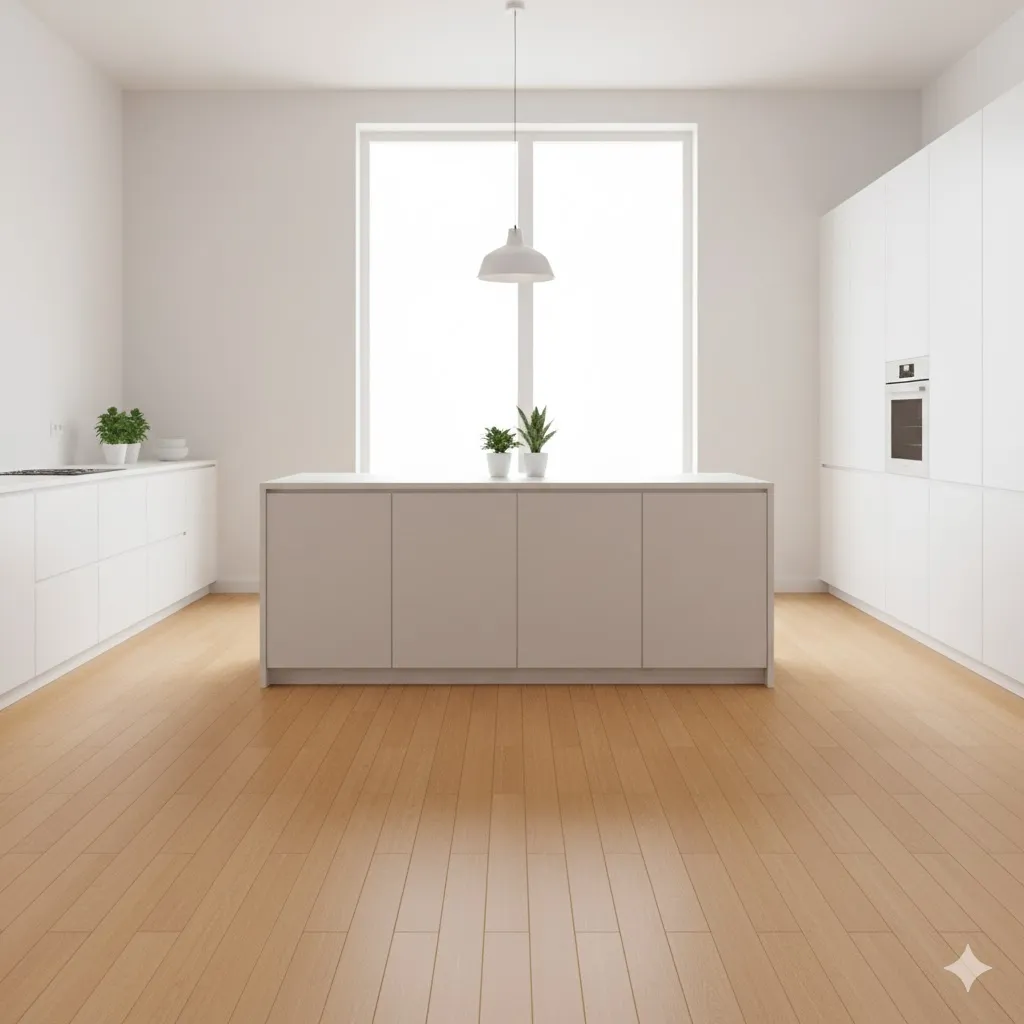
Bamboo is another eco-friendly flooring choice, often grouped with hardwood because it has a similar appearance. It is technically a grass, but it is very strong and fast-growing, which makes it a popular green option. Bamboo flooring can give your kitchen a clean, modern, and natural look. It comes in light tones and darker, carbonized colors that can match many design styles.
Bamboo as a Strong and Stylish Alternative
Bamboo can be harder than some traditional wood species, making it fairly resistant to dents and wear. It is usually finished with strong coatings to help protect against spills and staining. As with wood, you still need to be careful with water and avoid leaving puddles. Bamboo planks are often installed as floating floors and can be relatively easy to put in. The straight grain gives a neat, simple style that works well in both modern and classic kitchens. For homeowners who want a fresh, natural look with good strength, bamboo is a solid option.
Option 11: Polished Concrete Flooring
Polished concrete has become popular in modern and industrial-style homes. In many cases, it uses the existing concrete slab, which is polished and sealed to create a smooth, shiny surface. Concrete is extremely durable and can handle almost anything: heavy appliances, high foot traffic, and frequent cleaning. It can also be colored, stained, or patterned to give it more visual interest.

Modern, Minimal, and Extremely Tough
If you want a sleek, simple kitchen, polished concrete might be perfect. It gives a clean, minimal look that pairs well with metal, glass, and modern cabinets. It is very easy to maintain with simple sweeping and mopping. One downside is that concrete is hard and can feel cold, but area rugs and underfloor heating can help. Concrete is also unforgiving if you drop dishes—they will almost always break. Still, for homeowners focused on durability and a modern style, concrete is one of the toughest options available.
Option 12: Rubber Flooring
Rubber flooring is not just for gyms. It can also be a smart choice for kitchens, especially in homes where comfort and safety are top priorities. Rubber is soft, flexible, and naturally slip-resistant. It absorbs impact, which makes it more comfortable if you stand for long periods. It also helps reduce noise from footsteps and moving chairs.

Comfortable, Slip-Resistant, and Kid-Friendly
In a busy family kitchen, rubber flooring can make the space feel safer and more comfortable. It is water-resistant and easy to clean, and it comes in many colors and patterns. You can choose solid colors for a simple look or speckled designs that hide dirt well. Rubber can sometimes have a slight smell when new, but this usually fades over time. It may not fit every style, but in the right home, it offers an excellent mix of cushioning, safety, and durability.
Option 13: Linoleum Flooring
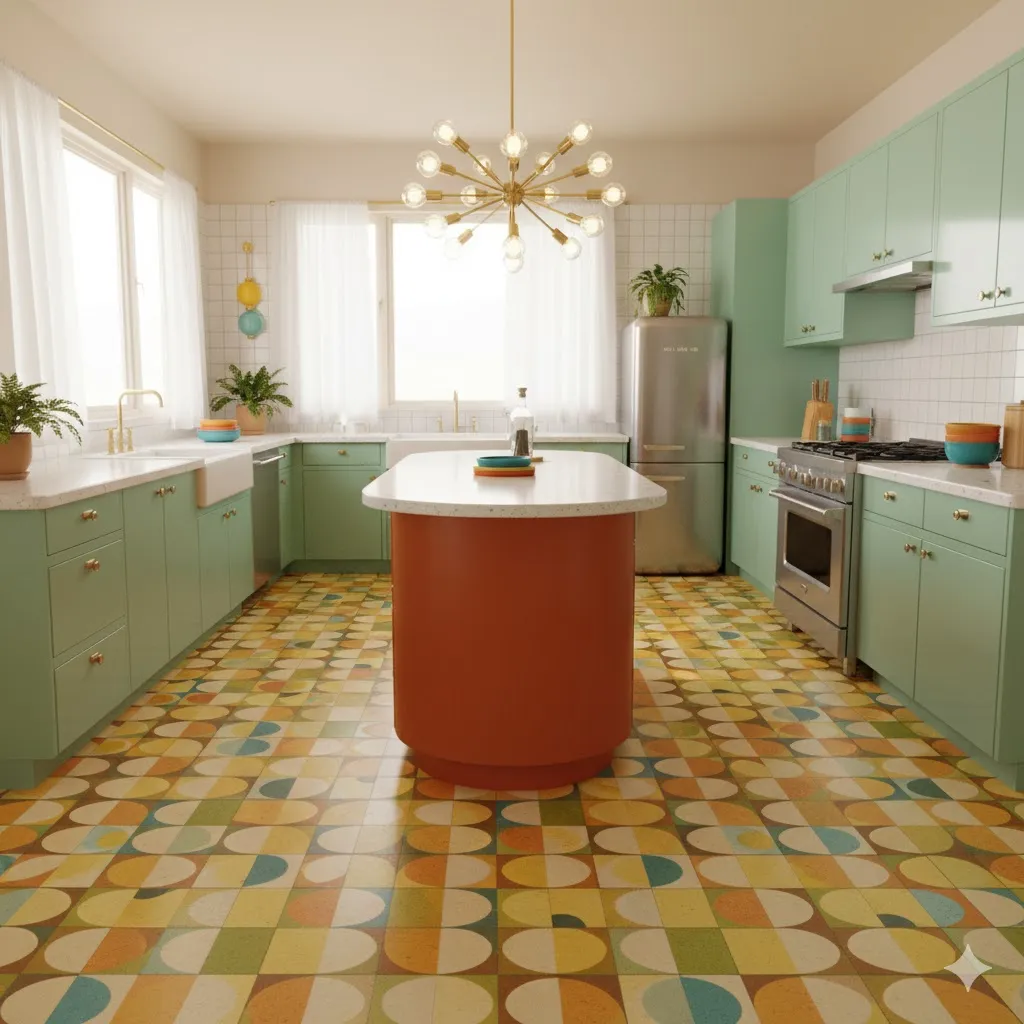
Linoleum is a natural flooring material made from linseed oil, wood flour, and other plant-based ingredients. It has been used for many years and is known for its durability and color options. Linoleum is often confused with vinyl, but it is more eco-friendly and can last a very long time if cared for properly. It is a strong, resilient surface that works well in kitchens.
Natural, Colorful, and Long-Lasting
Linoleum is available in many bright and soft colors, as well as patterns that can mimic stone or simple designs. It can be used to create unique looks, like borders or fun inlays. It is comfortable underfoot and has a little “give,” similar to vinyl. Linoleum does need sealing to protect it from water and stains, especially in a kitchen. With proper care, it can last decades and still look good. For homeowners who want a natural material with character and color, linoleum is a very interesting choice.
Option 14: Peel-and-Stick Tile Flooring
Peel-and-stick tiles are a great option for quick updates or renters who cannot change permanent flooring. These tiles often come with adhesive backing and can be stuck directly over some existing floors. They come in many designs, including stone, tile, and patterned looks. While they may not last as long as more permanent options, they can give your kitchen a fresh style without a big budget or complex tools.

Fast, Affordable, and Renter-Friendly Option
If you want to change your kitchen floor without major work, peel-and-stick tiles are worth a look. They are easy to cut and install, making them a good DIY project. Many designs look surprisingly stylish, like black-and-white patterns or faux marble looks. These tiles are usually water-resistant but may not be as strong as ceramic or vinyl planks. Over time, edges may lift in very wet areas. Still, for a fast, low-cost upgrade or temporary solution, peel-and-stick flooring can transform the look of your kitchen with very little effort.
Option 15: Mixed Material and Patterned Floors
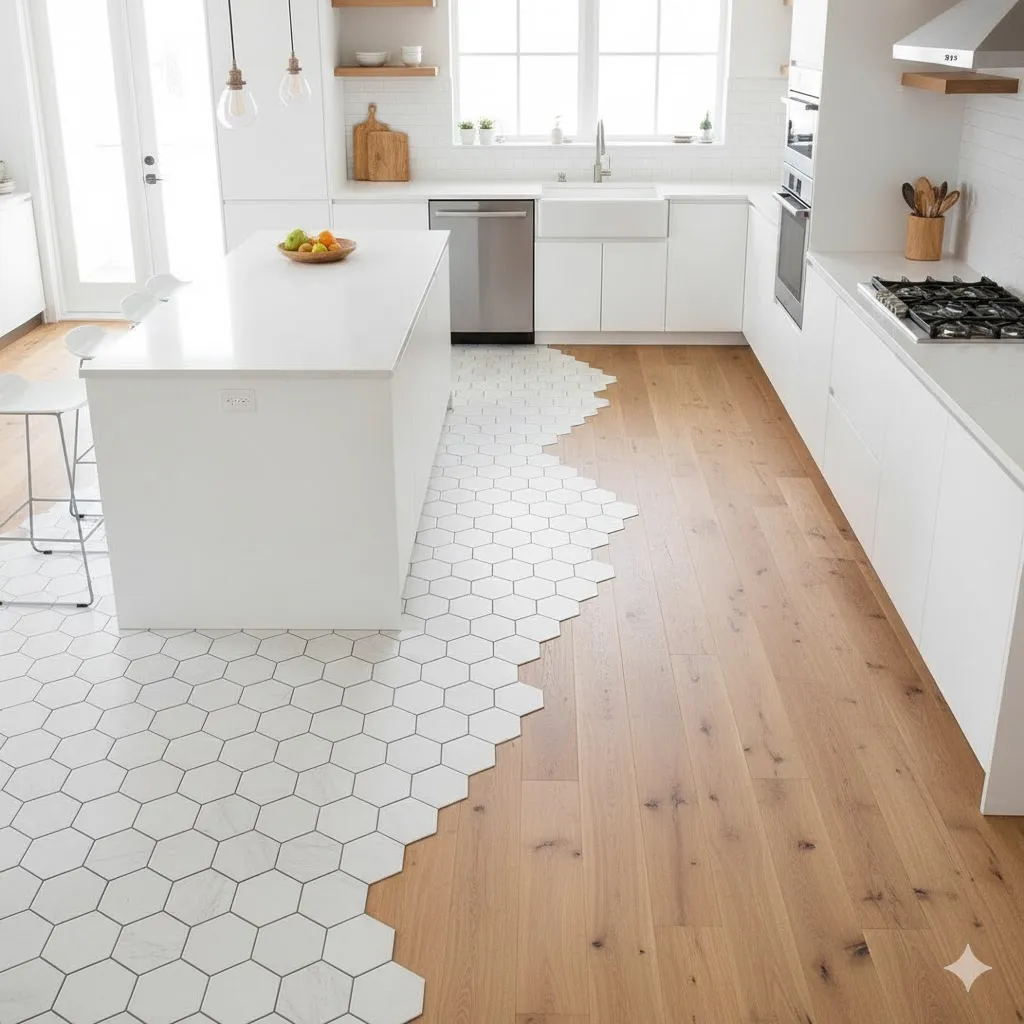
You do not have to choose just one flooring type or look. Mixed material and patterned floors are a growing trend. For example, you can combine tile near the sink with wood or LVP in other parts of the kitchen. You can also use patterned tiles in the center of the room to create a “rug” effect, with plain tiles around the edges. This allows you to highlight certain areas and add visual interest.
Combining Styles for a Unique Kitchen Look
Using more than one material or pattern lets you design a floor that truly reflects your style. You might choose a bold, colorful tile in the cooking zone and a softer, neutral floor near the dining area. Or you might mix hexagon tiles with wood planks for a modern, graphic effect. Just make sure the heights of the different materials match or are carefully transitioned, so the floor feels smooth and safe. When done well, mixed and patterned floors can make your kitchen look custom, creative, and stylish, while still staying practical and durable.
Conclusion: Choosing the Best Kitchen Floor for You
There is no single “best” kitchen flooring that works for every home. The right choice depends on your lifestyle, budget, and taste. If you want maximum durability and water resistance, porcelain or LVP may be perfect. If you love natural beauty, hardwood, stone, cork, or bamboo might match your style. For comfort and easy care, vinyl, rubber, or linoleum are strong options. Think about how you use your kitchen every day: Do you cook a lot? Do you have kids or pets? Do you want low maintenance or are you happy to give the floor extra care? When you answer these questions, it becomes much easier to pick a floor that offers both style and durability for years to come.
FAQs About Kitchen Flooring
1. What is the most durable kitchen flooring option?
Porcelain tile and polished concrete are among the most durable options. They handle heavy traffic, spills, and frequent cleaning very well. LVP is also highly durable while being softer underfoot.
2. Which kitchen floor is easiest to clean?
Tile, vinyl, and sealed concrete are very easy to clean with simple sweeping and mopping. Sheet vinyl and LVP are especially good because they resist stains and do not have deep grout lines.
3. Can I use hardwood flooring in the kitchen?
Yes, you can use hardwood in the kitchen, but it needs extra care. Wipe spills quickly and use rugs in wet areas. Engineered hardwood is often a better choice than solid wood because it handles moisture changes better.
4. What is the best flooring if I stand a lot while cooking?
If comfort is very important, consider cork, LVP, rubber, or vinyl. These materials are softer and more forgiving than stone, tile, or concrete, making long cooking sessions easier on your feet and back.
5. How do I choose a kitchen floor that matches my style?
Start with your overall home style—modern, classic, farmhouse, or industrial—and pick a material that fits that look. Then, choose colors and patterns that go with your cabinets and countertops. Samples can help you see how everything looks together in your real lighting.