
15 Open Concept Kitchen Layout Ideas for Bright, Airy Living

Open Concept Kitchen layout that brings light, air, and a warm feel to your home. Below you’ll find clear ideas, simple tips, and design choices that work for small apartments and larger homes. Each heading and subheading has an easy explanation so you can picture how it would feel in real life. Read on and pick the ideas that fit your taste and space.
Check it : 15 Stunning L-Shaped Kitchen with Island Ideas You’ll Love
Why Choose an Open-Concept Kitchen?
An open-concept kitchen creates a sense of space and connection with the rest of the home. It removes walls or uses low dividers so the kitchen flows into the dining and living areas. This design brings in more light, makes socializing easier, and helps small homes feel larger. For families, an open kitchen keeps everyone together: parents can cook while watching kids play, and guests can chat without being stuck in a separate room. Open kitchens also allow for flexible furniture arrangements and better traffic flow. If you love bright, airy spaces and want your kitchen to be part of daily life instead of hidden away, open concept is a great choice.
Layout Idea 1: Classic L-Shaped with Island
The L-shaped layout with an island is a top choice for open kitchens because it balances work and social zones. One leg of the “L” holds cooking and prep areas, while the other provides counter space and storage. The island sits in the middle and becomes a hub — for cooking, eating, or working. Islands can include sinks, cooktops, or storage, and they give you seating for quick meals. This layout keeps the work triangle tight (fridge, stove, sink) but still opens toward the living area. It’s great for small to medium open plans and lets natural light travel across the room, keeping the space bright and welcoming.
Why L-shaped + island works
An L-shaped plus island works because it organizes the kitchen without closing it off. The L-shape keeps counters and cabinets along two walls, leaving the rest of the room free. The island adds extra work surface and a place to sit, which makes the kitchen social. You can add pendant lights above the island to create a visual anchor while still letting light flow through. The island also helps define the kitchen area in an open space without building a wall. For families and hosts, this design supports both cooking and conversation — one person can cook while others sit and chat at the island.
Layout Idea 2: U-Shaped Open Kitchen with Breakfast Bar
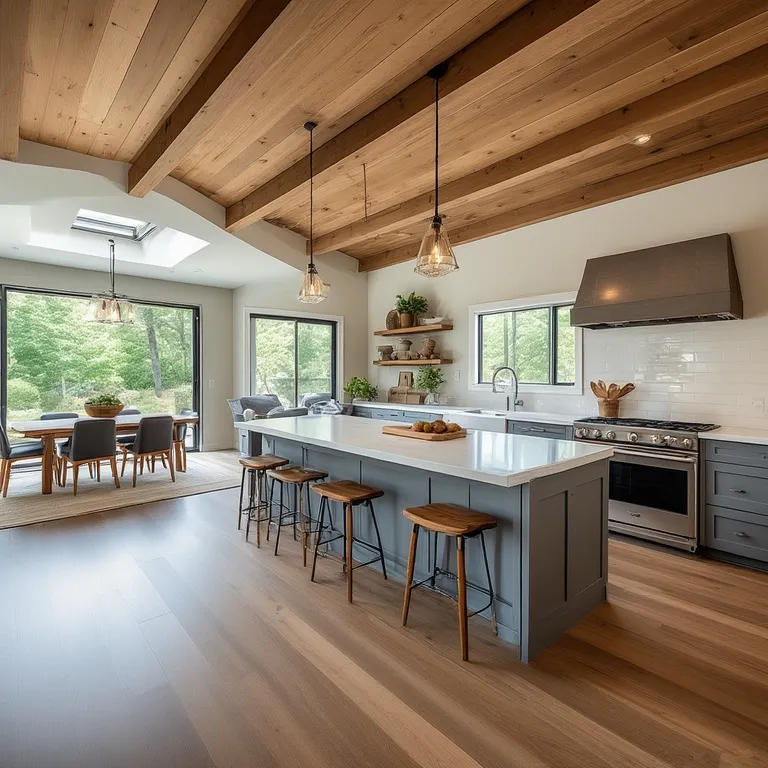
The U-shaped layout gives you lots of counter space and storage by wrapping cabinets around three sides. In an open concept, one side of the “U” can become a breakfast bar facing the living area. This setup offers a clear kitchen zone but keeps it connected to the rest of the home. It works well in wider rooms and gives multiple people places to work without bumping into each other. The breakfast bar adds casual seating, which is great for morning coffee or homework time, while the U-shape keeps tools and appliances within easy reach.
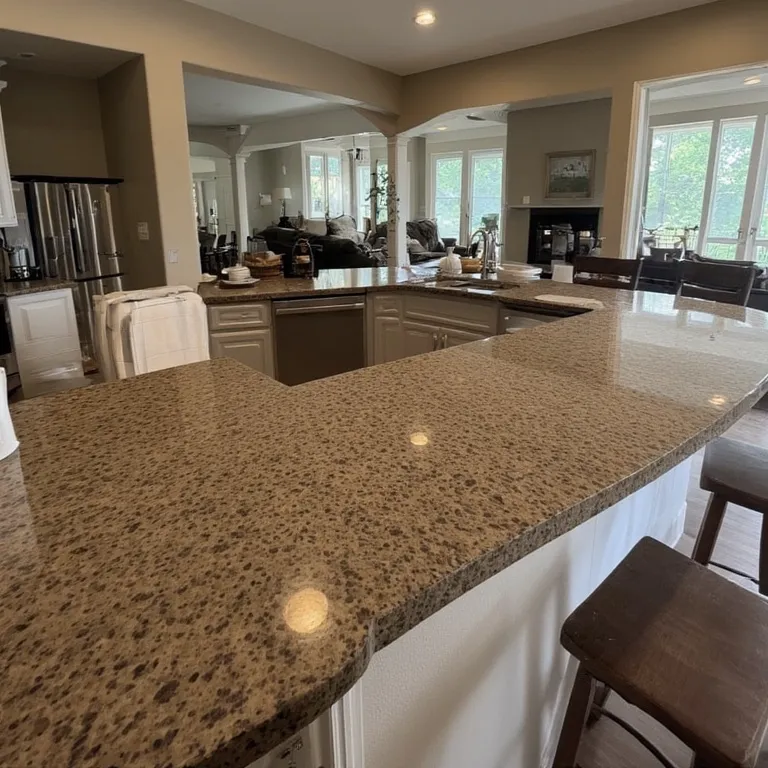
Layout Idea 3: Galley-to-Open Conversion
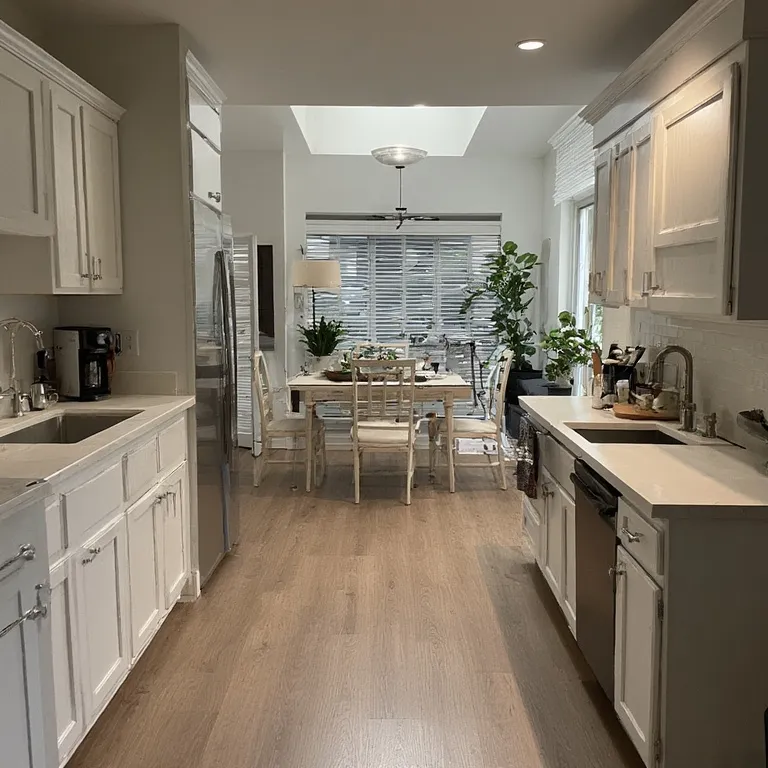
If you have a narrow galley kitchen, opening one side to the living area can transform the space. Remove the wall and replace it with an island or a slim counter, and your galley becomes a sleek, efficient open kitchen. This is a smart move in apartments or older houses where the kitchen used to be boxed in. You keep the efficient linear workflow of a galley but gain light and visual openness. Adding under-counter seating or a slim breakfast counter keeps the feel cozy but practical. The key is to maintain clear walkways and avoid crowding the central path.
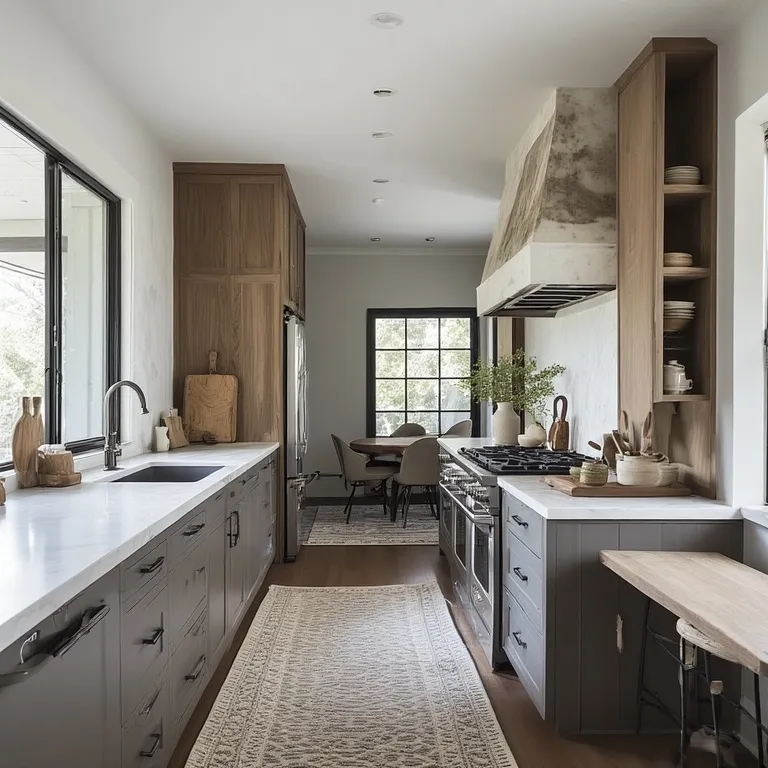
Layout Idea 4: Peninsula for Zoned Cooking
A peninsula is like a short island attached to a wall or cabinetry line. In an open concept, a peninsula can act as a visual boundary that separates kitchen work from living space while still keeping the area open. It’s perfect when a full island won’t fit. Use the peninsula for seating, storage, or as a prep station. Because it juts into the room, it helps define zones without walls. Peninsulas also allow for easy traffic flow around the kitchen and can include low partitions or glass for a sense of subtle separation, keeping the area airy and functional.
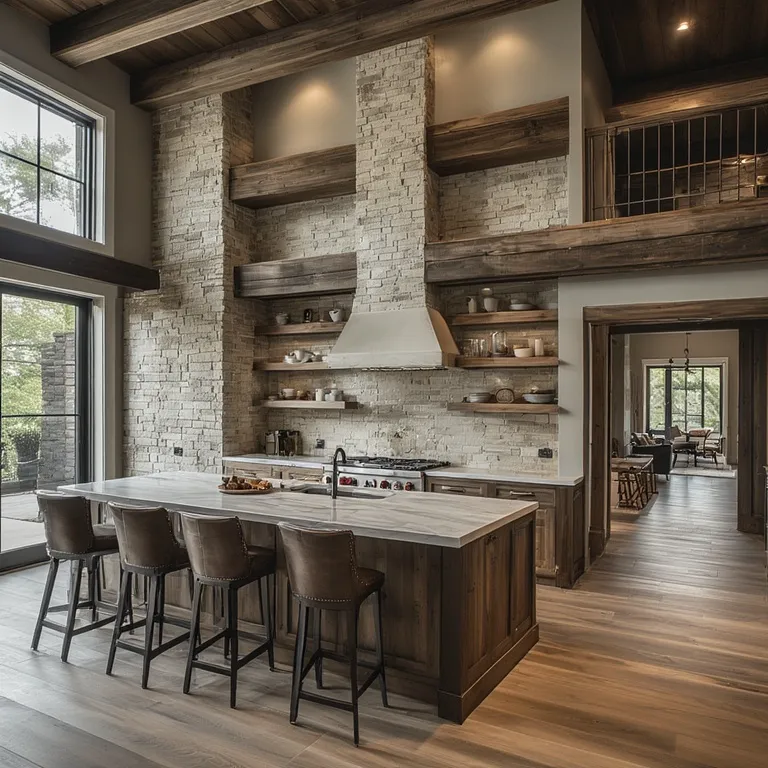
Layout Idea 5: Island with Seating and Extra Storage
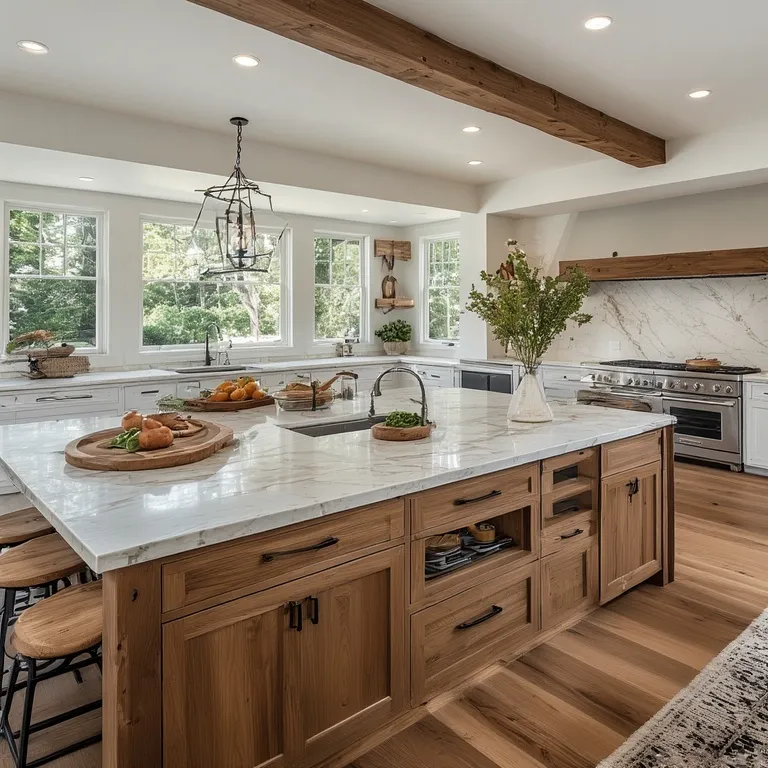
Make your island do double duty: eat, store, and work. An island with deep drawers, open shelving, or built-in cabinets keeps clutter out of sight while giving you plenty of surface area. Add comfortable stools and the island becomes a dining spot, homework station, or a place to sip coffee. In open layouts, islands can also house appliances like dishwashers or microwaves, which frees wall space. For brightness, choose a lighter countertop and under-island lighting to keep the room feeling open. Islands are social magnets — they encourage people to gather and keep the cook part of the party.
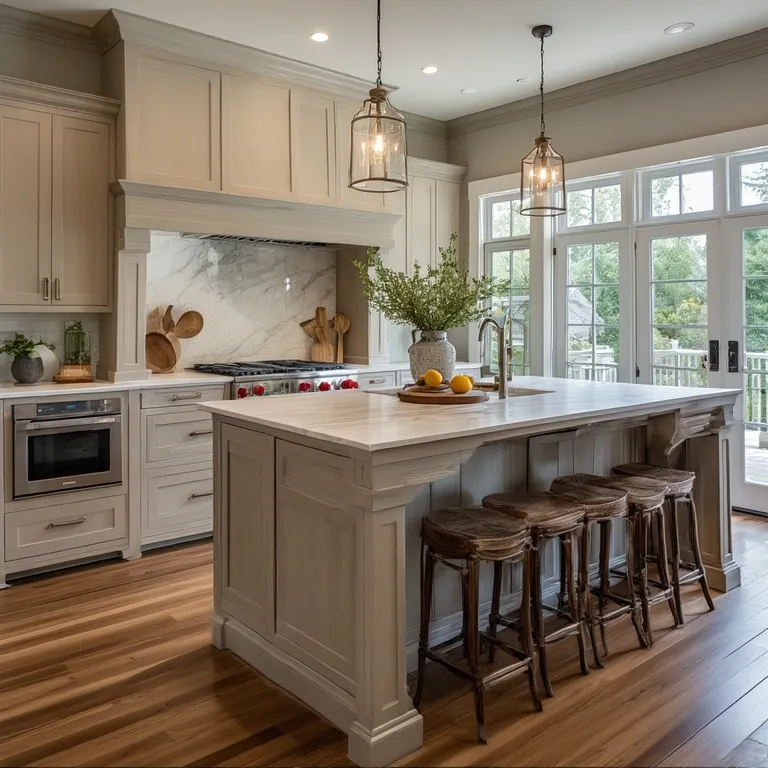
Layout Idea 6: Straight Line (One-Wall) with Dining Overlap
One-wall kitchens put all appliances and counters along a single wall. In an open plan, the dining table can sit right across, making the two zones overlap. This layout suits small spaces and studio apartments. Keep cabinets simple and use tall units or a pantry for storage. A slim island or rolling cart can add prep space without blocking sight lines. Light colors and reflective surfaces will help the single wall not feel heavy. Because everything is visible, tidy organization matters; use drawer dividers and closed cabinets to hide mess and keep the airy look intact.
Layout Idea 7: Two-Island Layout for Social Cooking
If you have a large open area, go bold with two islands. One island can handle cooking and appliances while the other serves as seating and casual dining. This doubles your workspace and creates distinct zones: one for the cook, one for guests. Two islands also allow traffic to flow around them, making the kitchen feel roomy and balanced. Use different finishes to visually separate the islands—perhaps a stone top for the cooking island and wood for the dining island. This layout is perfect for entertaining and keeps the whole space lively and bright when paired with good light and open sight lines.
Layout Idea 8: Open Pantry and Scullery Combo
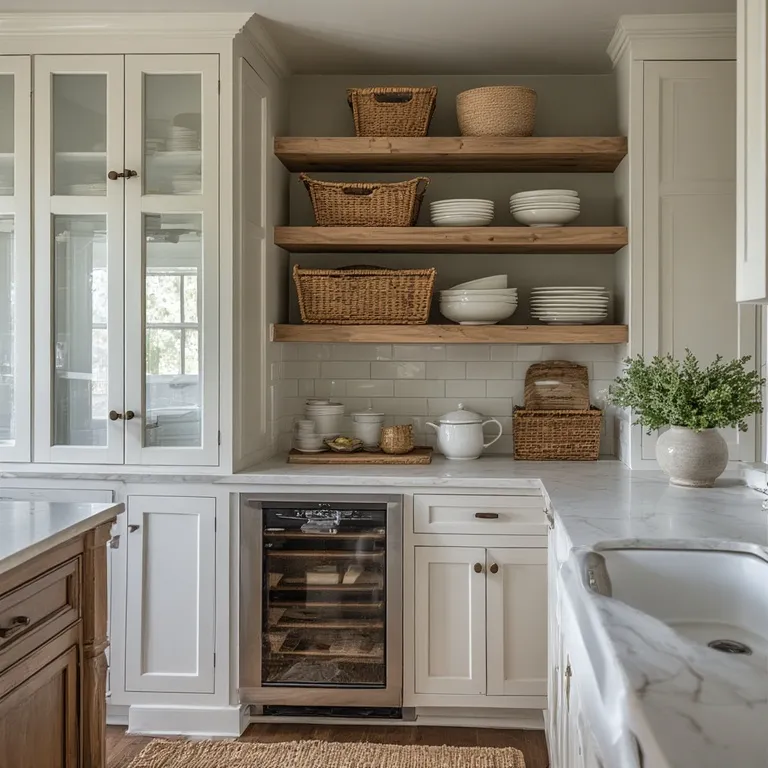
An open pantry (with glass doors or shelving) beside the main kitchen keeps essentials within reach while adding visual depth. Pairing it with a hidden scullery — a small extra room for dishwashing and prep — keeps the main kitchen tidy and photo-ready. The scullery can hide mess during parties while the open pantry shows off attractive dishes or baskets. This combo works well for people who love to cook and need both display and hidden storage. Keep the pantry organized with labeled containers and the scullery simple with easy-to-clean surfaces so the whole area stays light and breezy.
Layout Idea 9: Corner Banquette with Integrated Kitchen
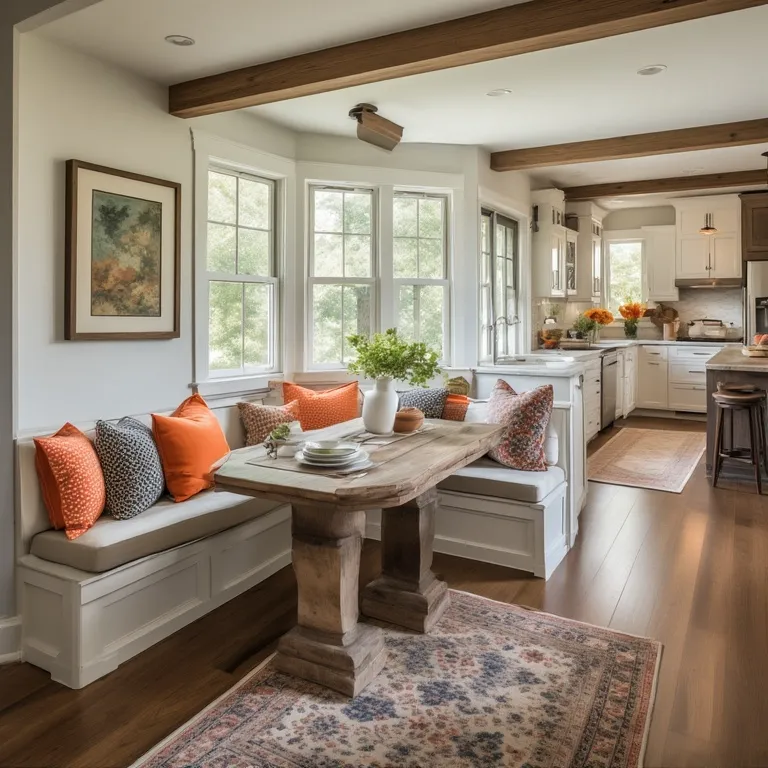
A cozy corner banquette next to an open kitchen creates a warm breakfast nook and maximizes seating. Built-in benches around a small table save space and make the area inviting. The kitchen can curve around the banquette or sit opposite it, creating a friendly conversation loop. Use bright cushions and light upholstery to keep the nook airy. The banquette also offers hidden storage under the seats, which is a bonus in small homes. This layout blends eating and living spaces smoothly, making the kitchen feel less formal and more like the heart of the home.
Layout Idea 10: Minimalist White-on-White Bright Plan
White cabinets, pale countertops, and light floors reflect light and make the open kitchen appear larger and cleaner. A minimalist white plan focuses on simple lines and hidden storage so the space feels calm and uncluttered. Add texture with natural wood accents, soft rugs, or plants to avoid a cold look. White works especially well with big windows or glass doors that bring natural light in. Keep hardware subtle and appliances integrated where possible. The result is a fresh, bright kitchen that blends with living spaces and gives a sense of peace and openness.
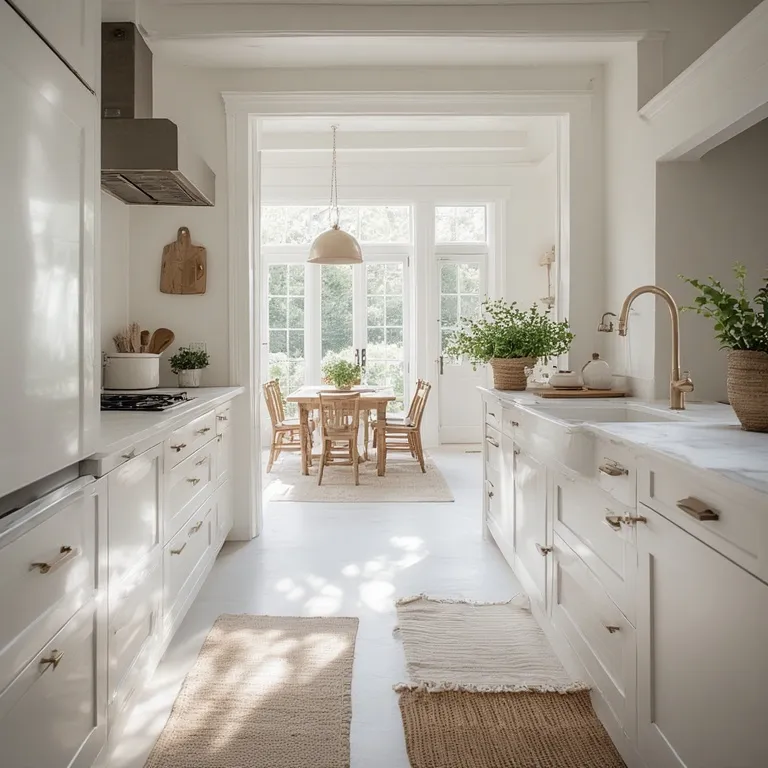
Layout Idea 11: Mixed Materials — Wood, Stone, and Metal
Combining materials brings warmth and personality while keeping an open feel. Think wood cabinets, stone countertops, and metal accents like brass handles or steel shelves. Use lighter woods and pale stones to keep brightness; darker materials can add contrast but use them sparingly so the room doesn’t feel heavy. Mixed materials create focal points — a wooden island or a stone backsplash — while the rest of the kitchen stays light. This approach lets you add character without closing the space, and it invites the eye to move across textures, making the kitchen feel layered and lived-in.

Layout Idea 12: Glass Partitions and Half-Walls
If you want some separation without losing light, use glass partitions or half-walls. Glass keeps sight lines open and lets light pour through, while half-walls give low visual separation and a place for bar stools. Frosted or ribbed glass can add privacy while still brightening the space. These elements work well between kitchen and entryways or when you need to block direct cooking sightlines without building a full wall. They are practical for noise control and splash protection, yet keep an airy, modern look that fits many open plan homes.
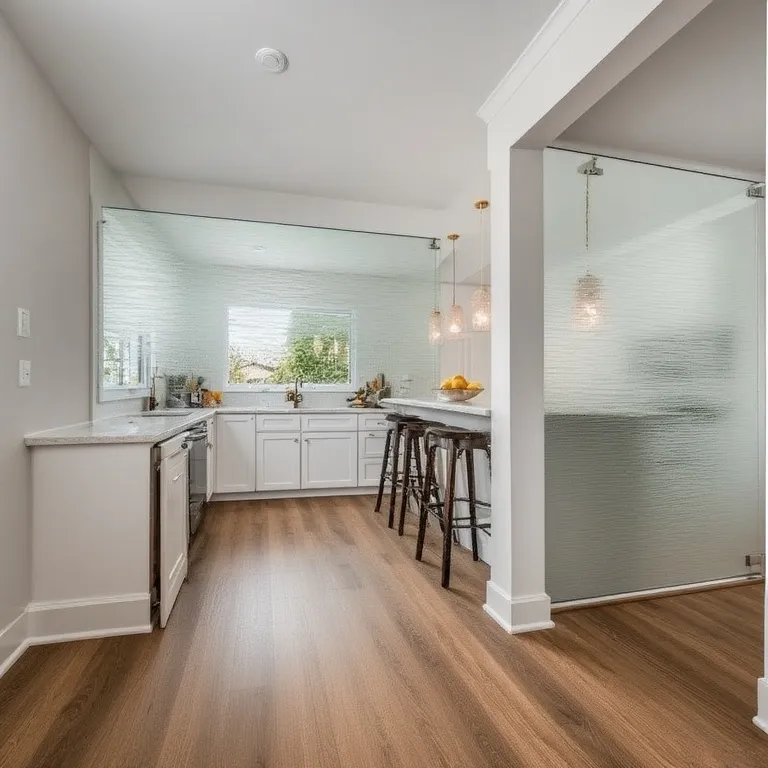
Layout Idea 13: Skylights and Clerestory Windows
Add light from above with skylights or clerestory windows to make any open kitchen feel sunnier. Skylights bring direct daylight, while clerestory windows high on the wall let in soft light without compromising privacy. These choices broaden the sense of vertical space and make the kitchen feel less boxed in. Pair skylights with strategic task lighting so you have bright work surfaces at night. Skylights above an island or dining area create a dramatic bright spot that draws people in and makes the whole open plan feel fresh and uplifting.
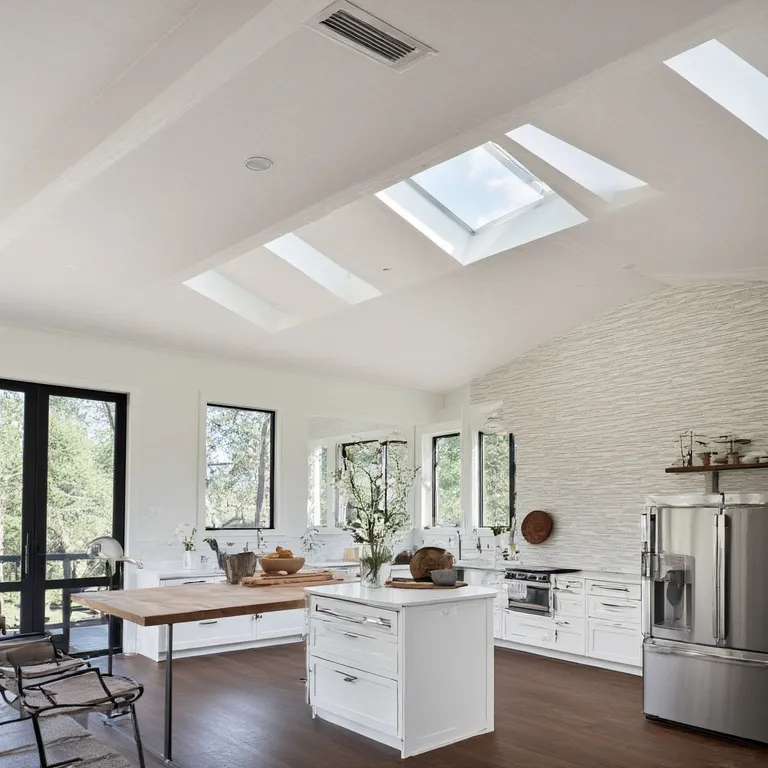
Layout Idea 14: Smart Appliance Placement for Flow
Where you put appliances affects how the kitchen feels and functions. Keep the fridge near the main entry for quick access, place the sink near a window if possible, and group cooking appliances together for safety and ease. In open plans, avoid putting loud appliances next to seating areas; consider quiet options or placement in a scullery. Built-in ovens and microwaves at waist height improve ergonomics and keep counters clear. Smart placement helps traffic flow, reduces cross-walks, and keeps the open space feeling organized — which in turn keeps the room feeling bright and calm.
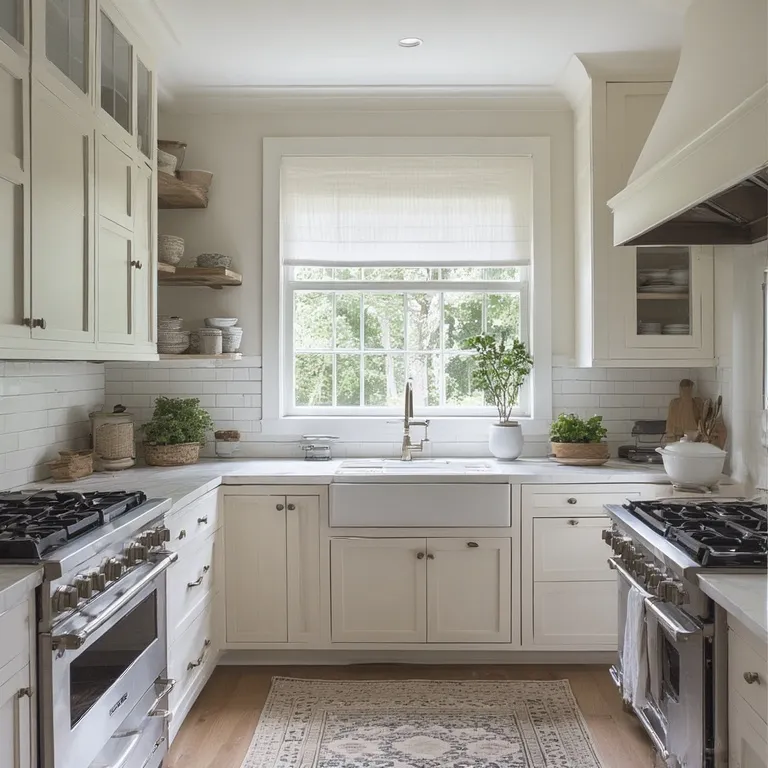
Layout Idea 15: Outdoor-Connected Open Kitchen
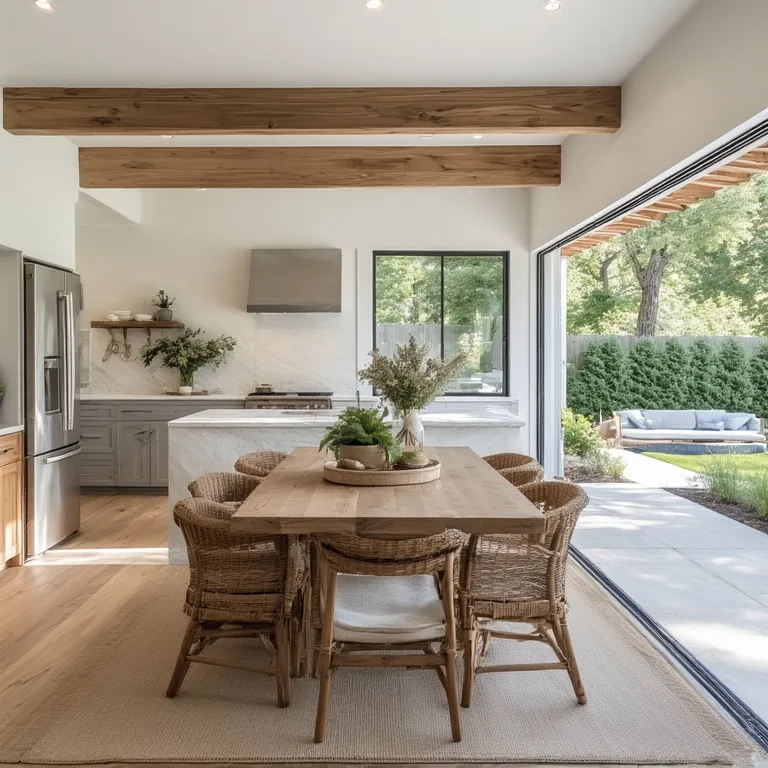
Extend the open kitchen to the outdoors with sliding glass doors, a large window bar, or a pass-through to a patio. This connection lets light and air flow freely and gives you more space for dining and entertaining. Outdoor kitchens or grills near the main kitchen shorten food journeys and make hosting easy. When doors are open, your cooking area expands visually, which makes the whole home feel bigger. Use similar flooring or complementary materials to blur the inside/outside line. This layout is perfect for sunny climates and anyone who loves entertaining in fresh air.
Design Tips to Keep the Space Bright and Airy
To keep your open kitchen light and free, choose a simple color palette, limit clutter, and pick furniture that feels light (think slim legs, open backs). Use reflective finishes like polished stone or glossy tiles sparingly to bounce light without glare. Keep tall cabinets to a minimum on the side facing living spaces so you don’t block sight lines. Plants, mirrors, and light rugs help add life and softness without heavy visual weight. Remember to plan for storage — the cleaner your counters, the brighter the room feels. Small, consistent design choices add up to a calm, airy kitchen you’ll love.
Lighting and Color Choices
Good lighting makes a huge difference. Combine ambient lights (recessed ceiling lights), task lights (under-cabinet strips), and feature lights (pendants over islands) so each zone is well lit. Choose warm white bulbs for a cozy feel or cool white for crisp brightness — but keep the temperature consistent across the space. For color, light neutrals like soft creams, warm whites, and pale grays keep things airy. Add one or two accent colors in textiles or small appliances to give personality without overpowering the space. Balanced lighting plus the right colors make the open plan feel spacious and welcoming.
Finishing Touches and Textures
Small finishes bring the whole look together. Soft wood tones, woven baskets, and ceramic bowls add warmth without bulk. Use matte or satin finishes for a soft glow that hides fingerprints and keeps surfaces looking clean. Add texture with a woven pendant, a stone backsplash, or a textured rug to avoid a flat look. Keep metals consistent — for example, choose brushed nickel or brass across fixtures so the kitchen feels cohesive. Thoughtful textures and finishes create a layered, inviting space that keeps the bright, open feel but adds character and comfort.
Final Checklist Before You Build or Renovate
Before you start demo or order cabinets, check these essentials: measure the space and door swings, map the work triangle, plan electrical and plumbing needs, and consider natural light angles. Think about where people will walk and sit, and allow at least 1 meter (about 40 inches) of clear walkway in busy zones. Decide whether you want integrated appliances and how much hidden storage you need. Choose durable surfaces for high-use areas and test sample colors in real light. Finally, plan lighting layers and think about ventilation — good air flow keeps open kitchens comfortable and bright.
Conclusion
An open-concept kitchen can change how your home feels — from cramped and closed to bright, airy, and social. Whether you pick an L-shaped kitchen with an island, a two-island setup, or a minimalist white plan, the key is balance: let light flow, keep storage smart, and create clear zones for work and gathering. Use textures, smart lighting, and the right appliance placement to keep the space functioning beautifully. With these 15 layout ideas and practical tips, you can design an open kitchen that fits your life — whether you love quiet mornings, busy family dinners, or lively parties.
FAQs
Q1: Is an open-concept kitchen good for small homes?
A1: Yes. Open kitchens can make small homes feel larger because removing walls lets light and sight lines travel. Use one-wall or L-shaped layouts with smart storage and light colors to keep the space airy.
Q2: How do I keep cooking smells from spreading in an open layout?
A2: Good ventilation is key. Install a strong range hood that vents outside, add windows you can open, and consider a scullery or glass partition if heavy cooking is common. Also keep doors to bedrooms closed during big meals.
Q3: What materials keep an open kitchen looking bright?
A3: Light wood, pale stone, and matte or satin white finishes reflect light well. Avoid too many dark surfaces near windows, and use glass, mirrors, or shiny backsplashes sparingly to bounce light.
Q4: Can I have a quiet open kitchen if I have noisy appliances?
A4: Yes. Choose quieter models, place loud appliances away from seating areas or in a scullery, and use soft finishes (rugs, upholstered seating) to absorb sound. Cabinet doors and doors to a scullery can also help.
Q5: How much seating should an island provide?
A5: Plan roughly 60 cm (24 inches) of width per person at the island for comfortable seating. For three people, allow at least 180 cm (72 inches) of island edge space. Adjust based on stool size and how close you want people seated.