
13 Essentials First Sewing Space that You Actually Need

Starting your sewing journey becomes much easier when you have the right setup. That’s why this guide on 13 Essentials First Sewing Space that You Actually Need is perfect for beginners who want a clean, organized, and productive area. In this blog, we’ll walk through the basic tools, furniture, and storage ideas that help you enjoy sewing from day one. With these 13 Essentials First Sewing Space that You Actually Need, you can create a workspace that is simple, functional, and comfortable—no matter the size of your home.
1. A Stable Sewing Table
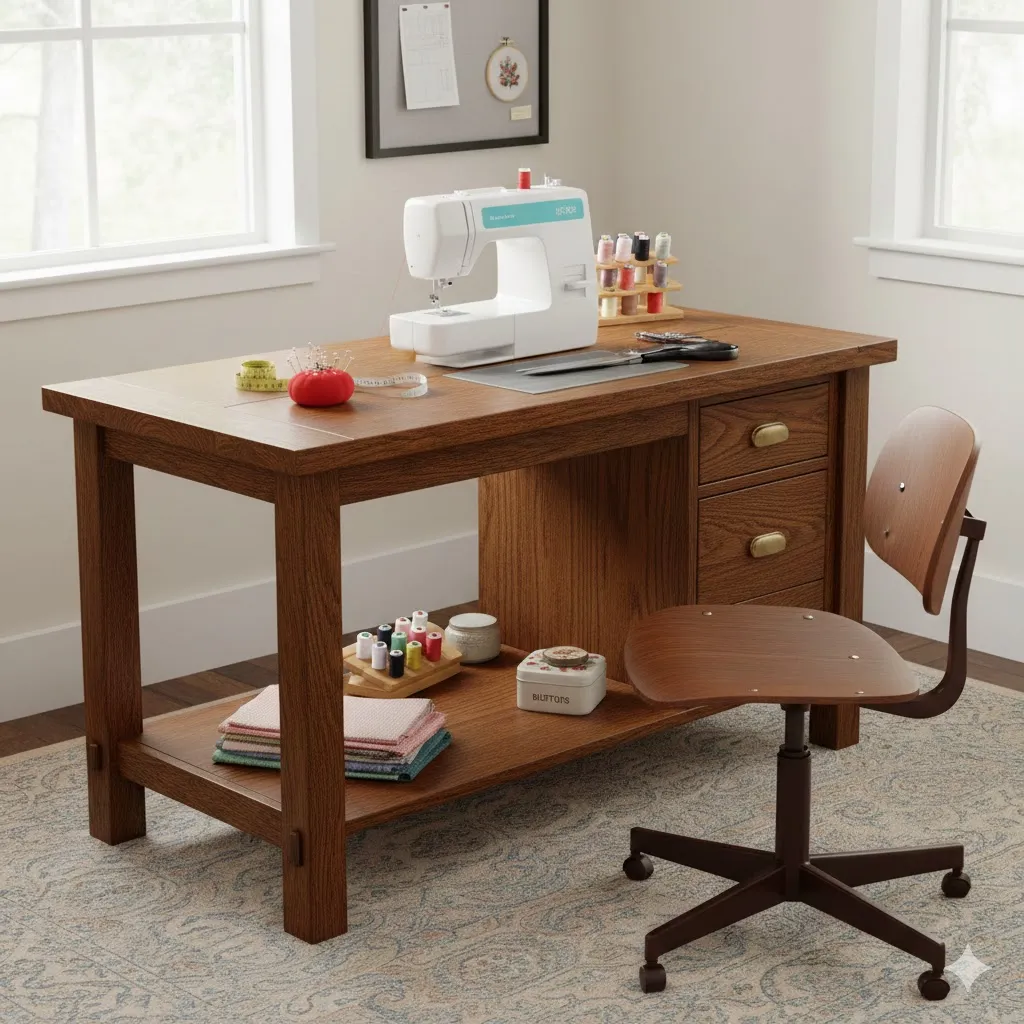
A strong, non-shaky table keeps your machine steady and helps you sew accurately. Choose a surface with enough room for fabric and tools.
2. A Quality Sewing Machine
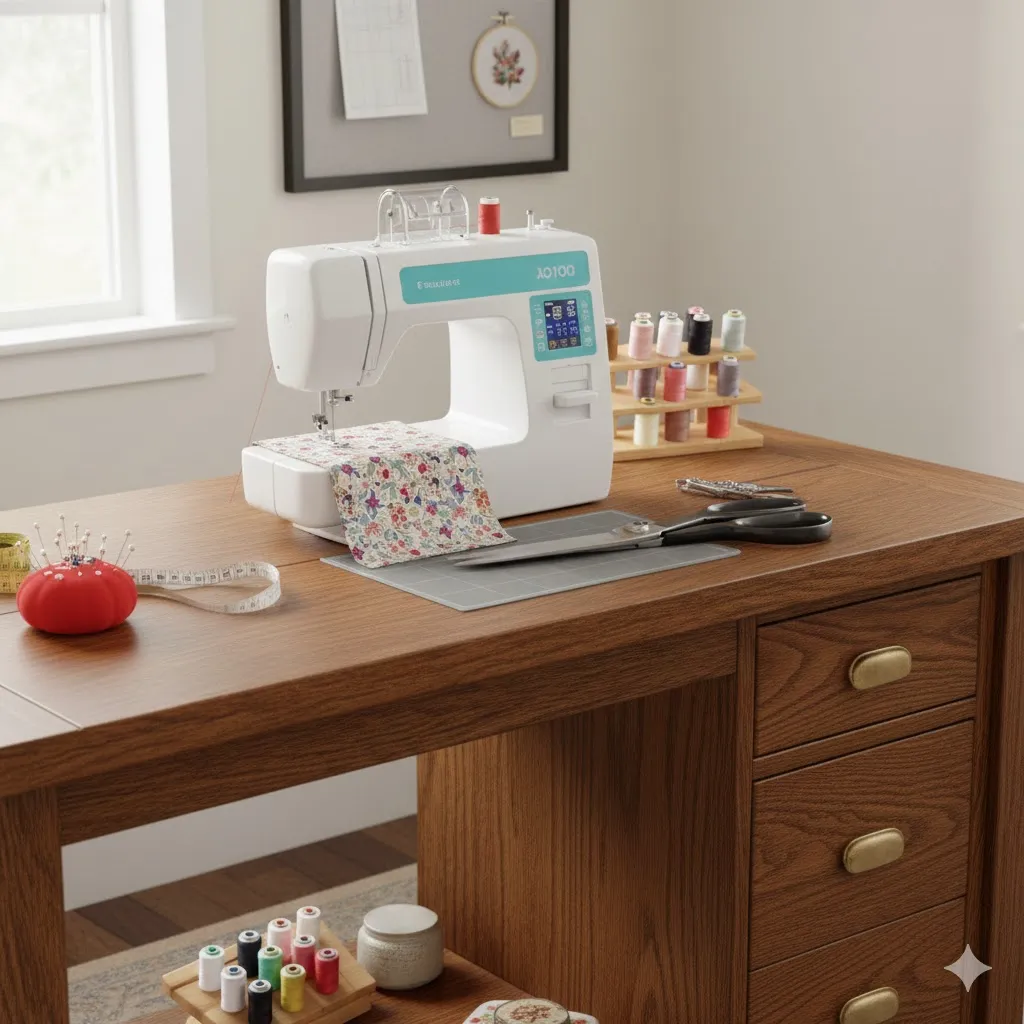
You don’t need the most expensive model. A basic, reliable sewing machine is perfect for beginners and supports most simple projects.
3. Good Lighting
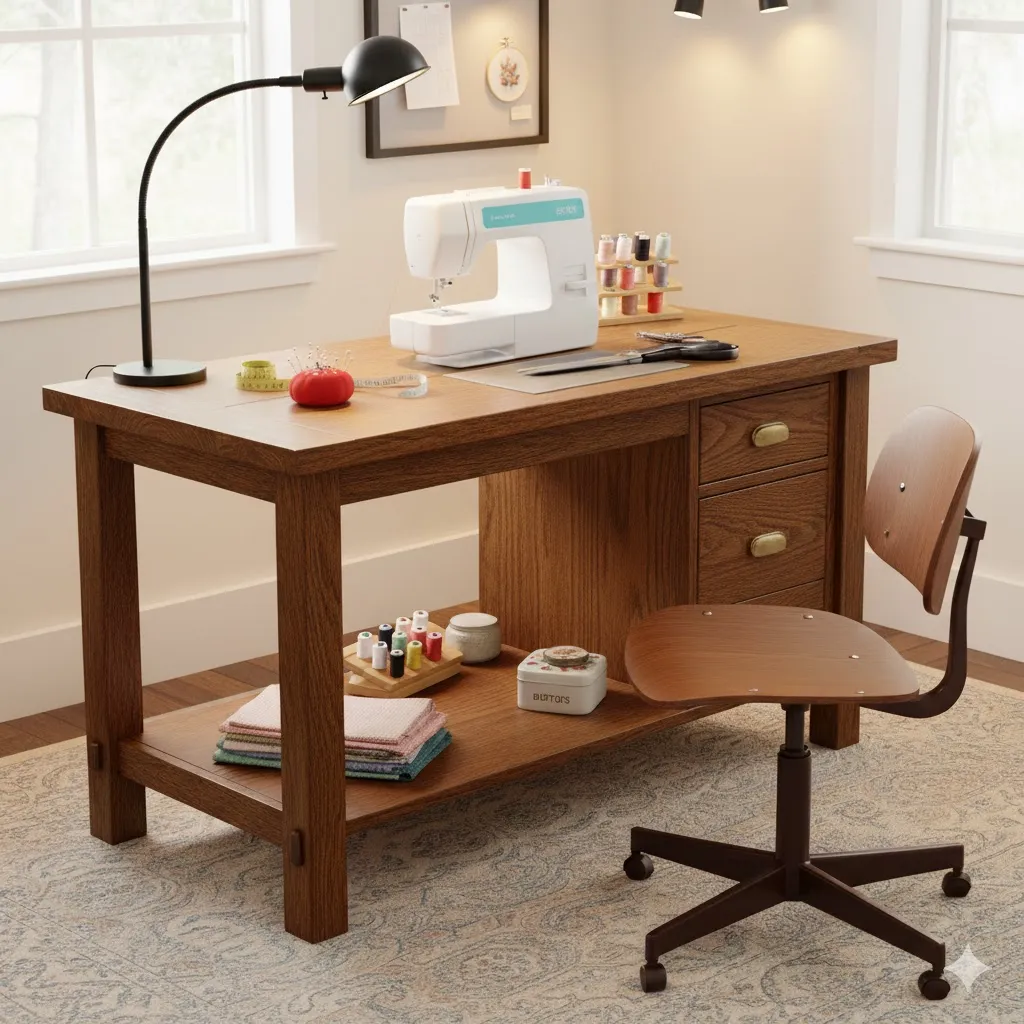
Bright lighting reduces eye strain and helps you see stitches clearly. A desk lamp or LED light strip works well in small spaces.
4. A Comfortable Chair
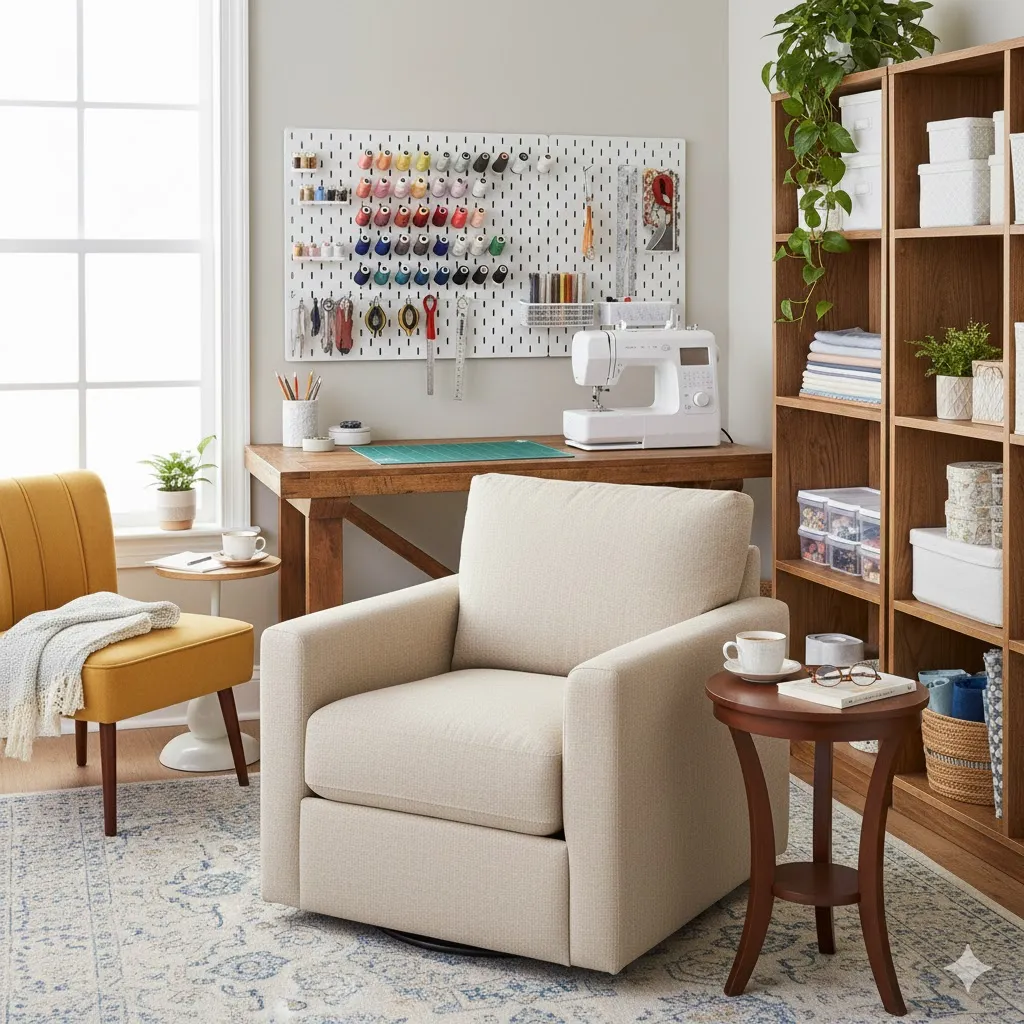
Pick a chair that supports your back. Sewing often takes hours, so comfort makes a huge difference.
5. Cutting Mat
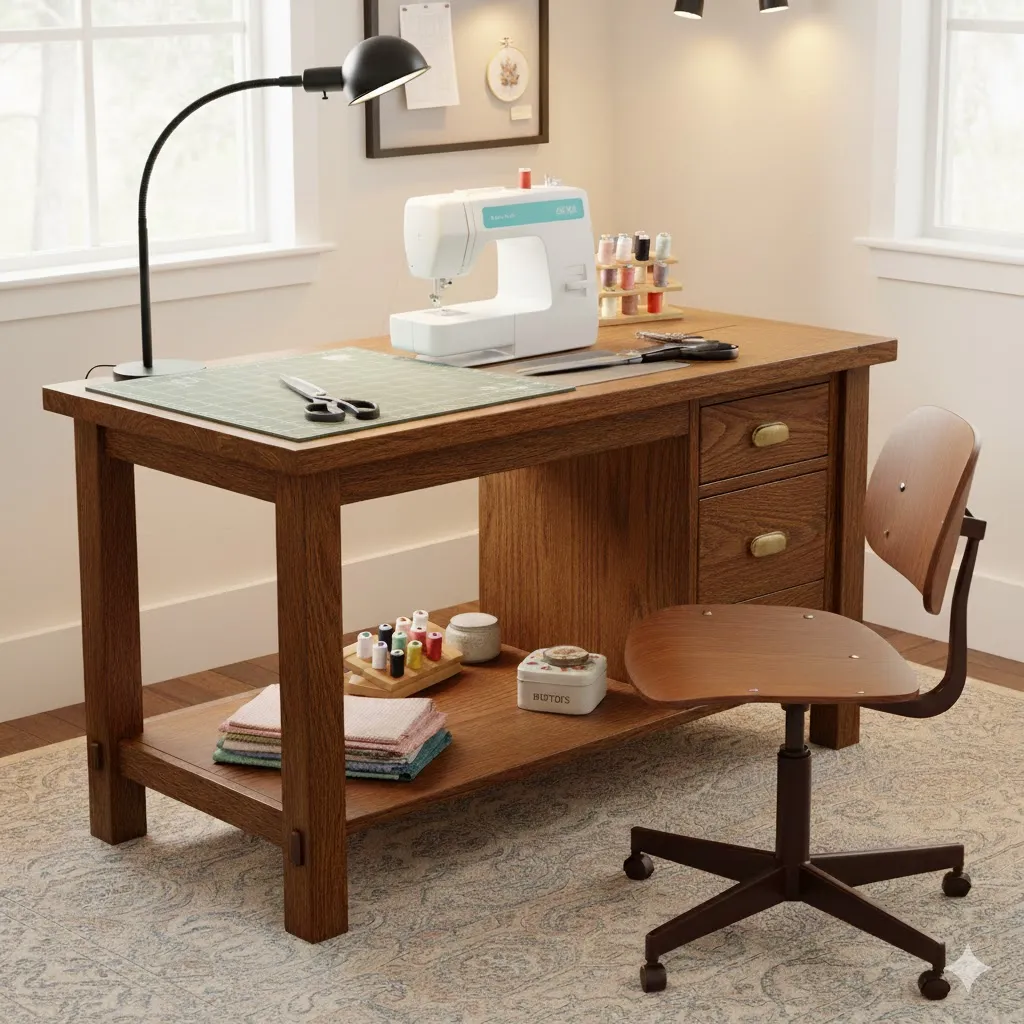
A self-healing cutting mat protects your table and makes cutting fabric easier. Choose a size that fits your workspace.
6. Rotary Cutter and Fabric Scissors
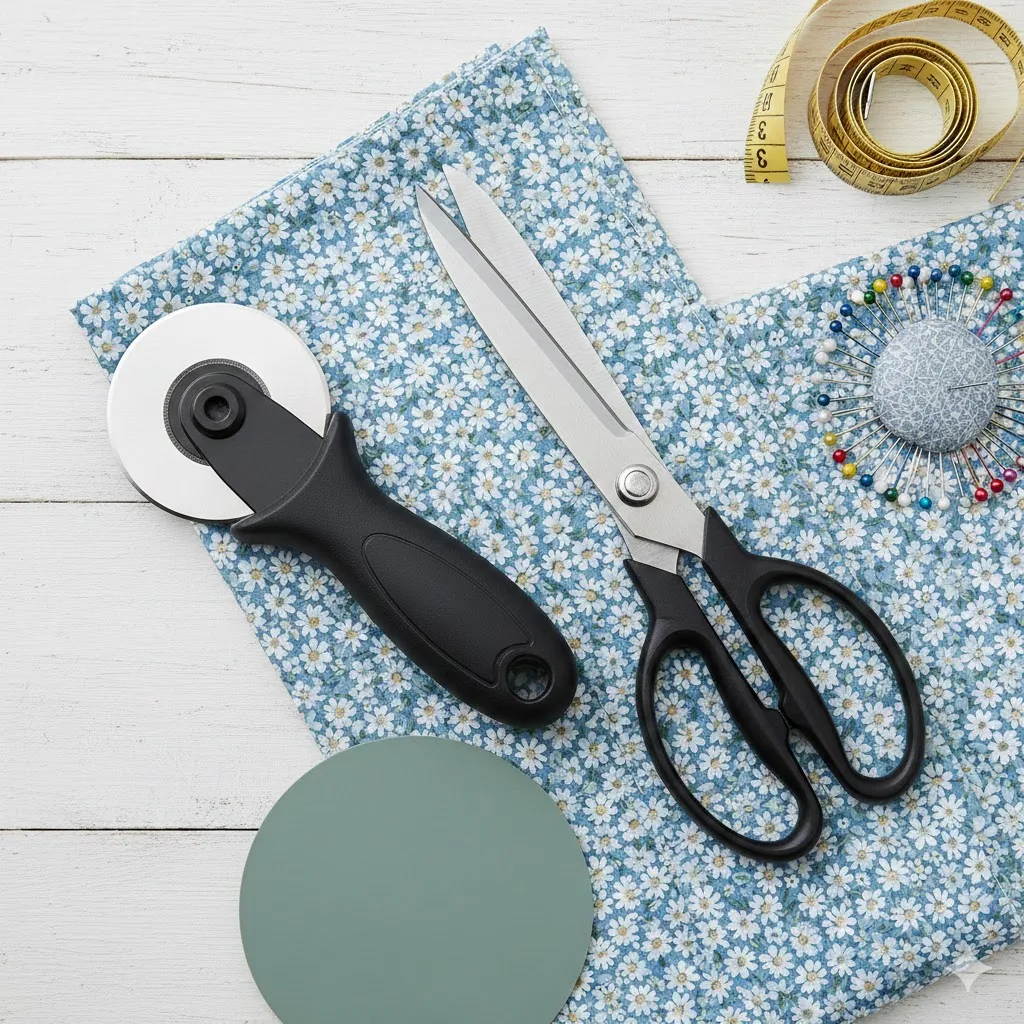
You’ll need both—scissors for curves and a rotary cutter for straight, clean lines. Keep them sharp for the best results.
7. Measuring Tools
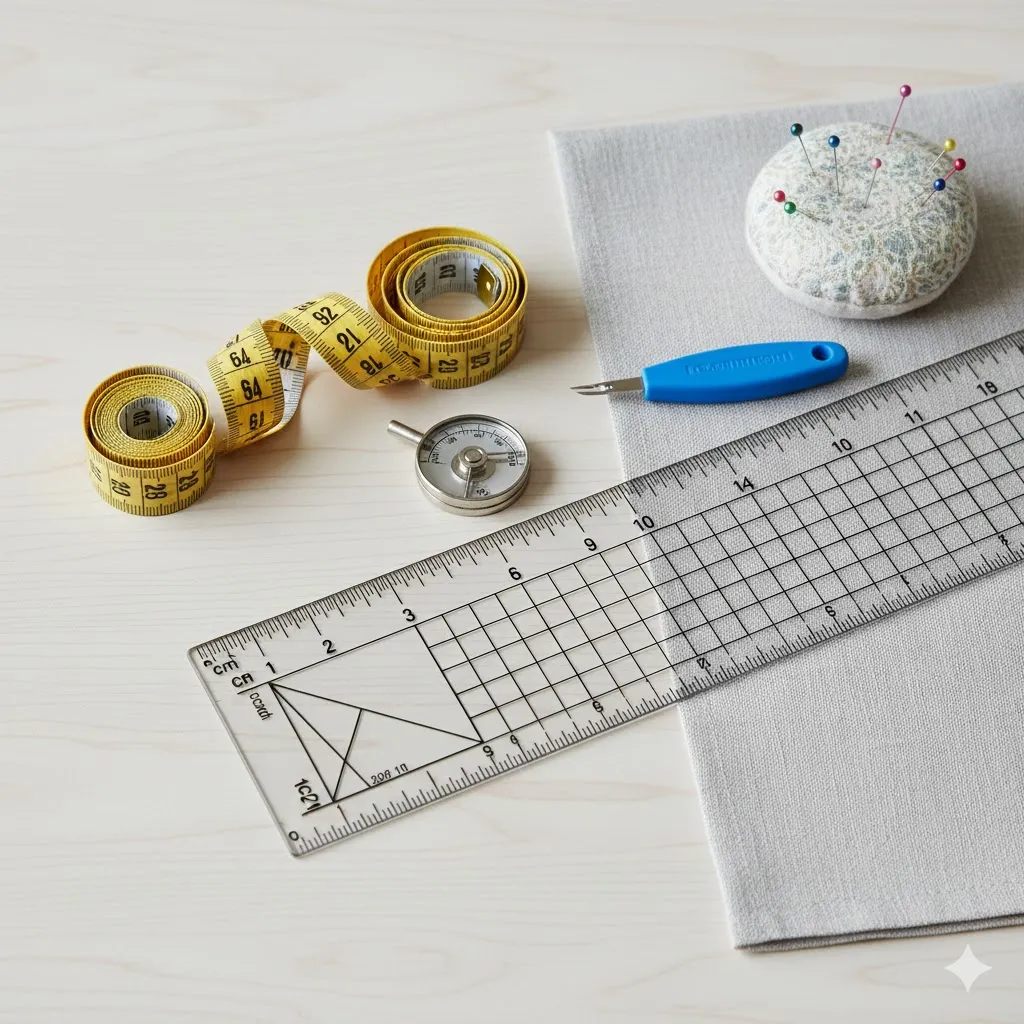
A measuring tape, clear ruler, and seam gauge help keep your sewing accurate. They are must-haves for any sewing setup.
8. Thread Storage
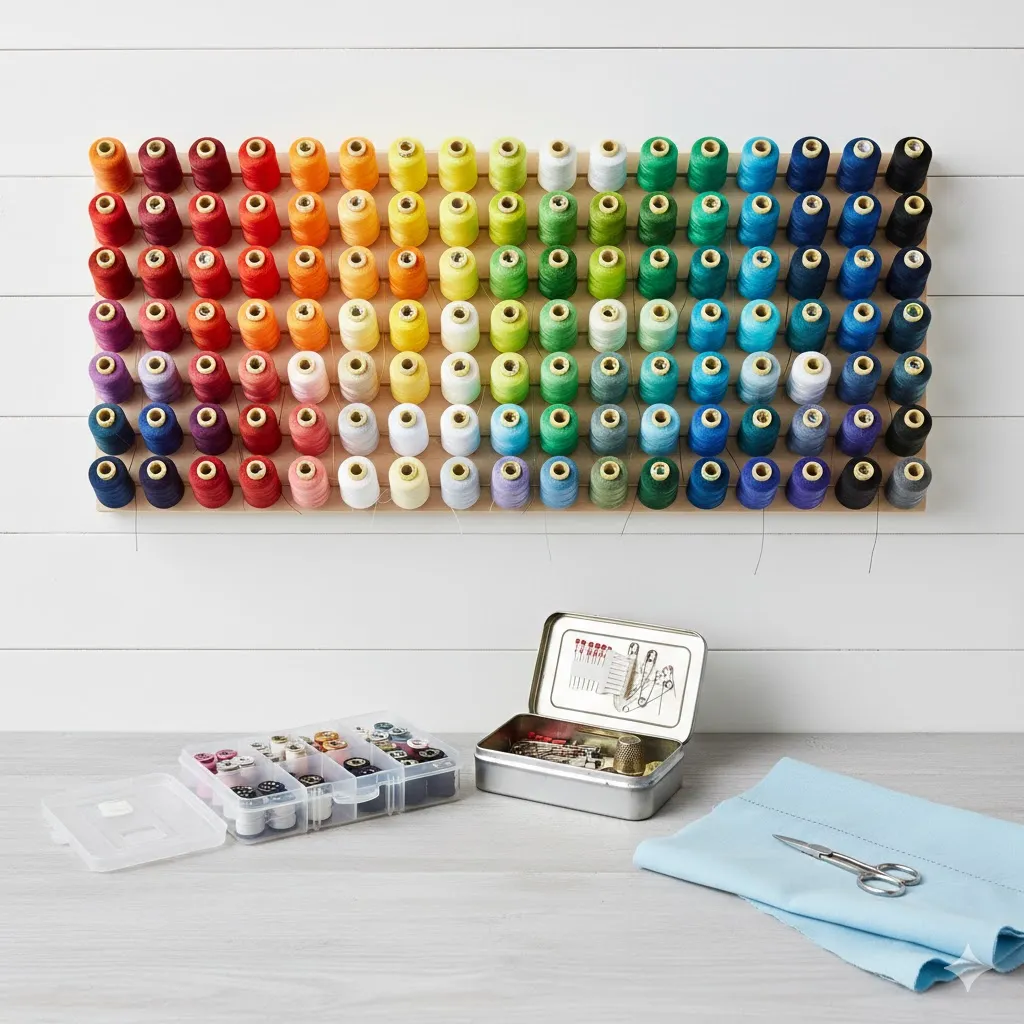
A small organizer or thread rack keeps your threads tidy and prevents tangles. It also makes choosing colors easier.
9. Pin Cushion and Pins
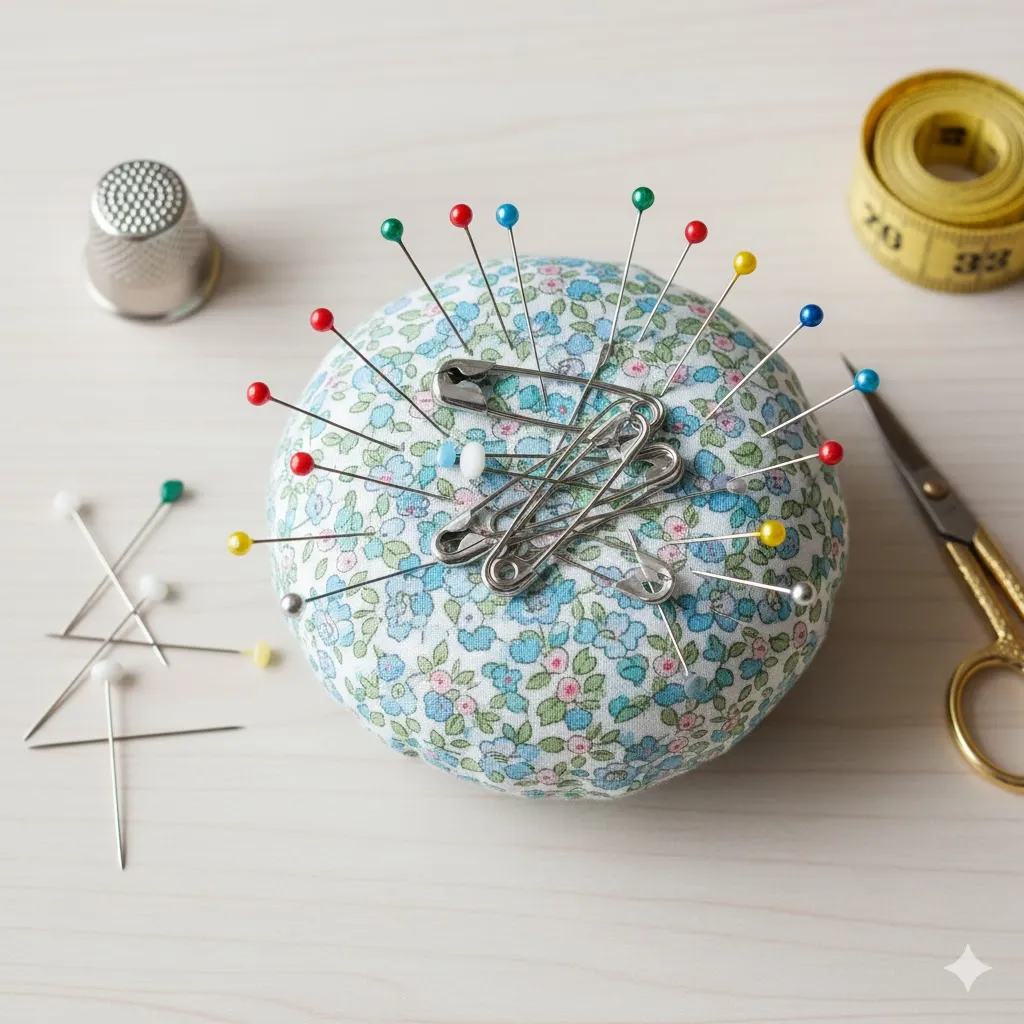
Pins help hold pieces together, and a pin cushion keeps them easy to reach. Both are essential for smooth sewing.
10. Iron and Ironing Board
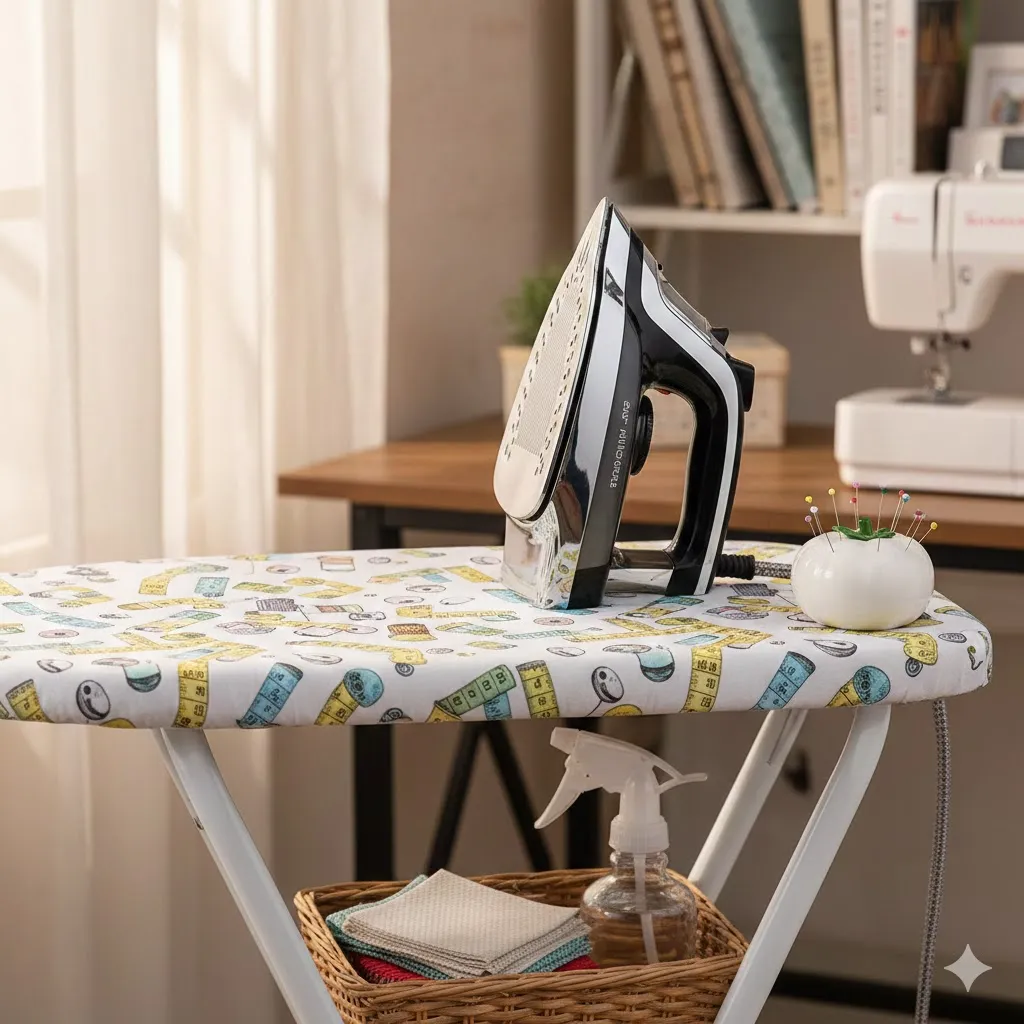
Pressing fabric is important for professional-looking results. A mini ironing board works great in small sewing spaces.
11. Fabric Storage Bins
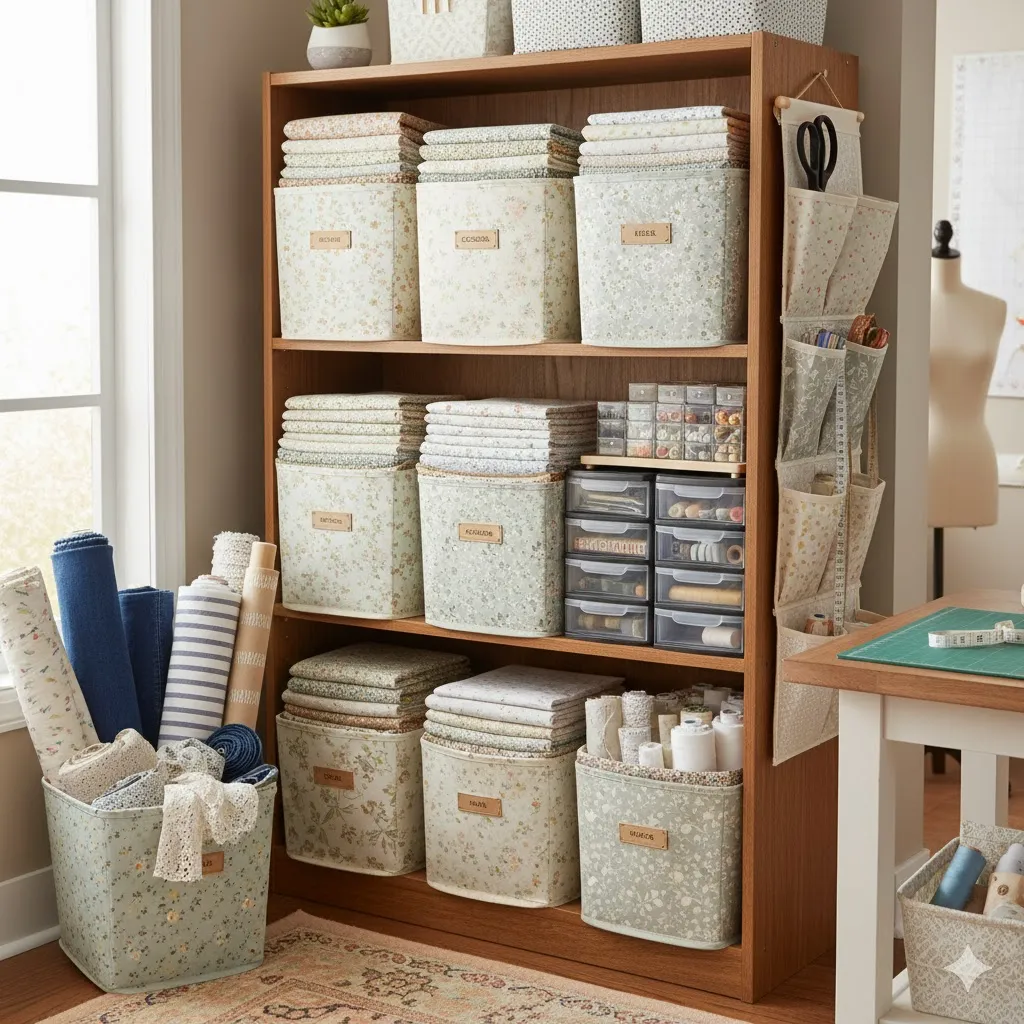
Use baskets, drawers, or plastic bins to keep fabrics neat and dust-free. Organizing by color or type saves time later.
12. Trash Bin or Scrap Basket
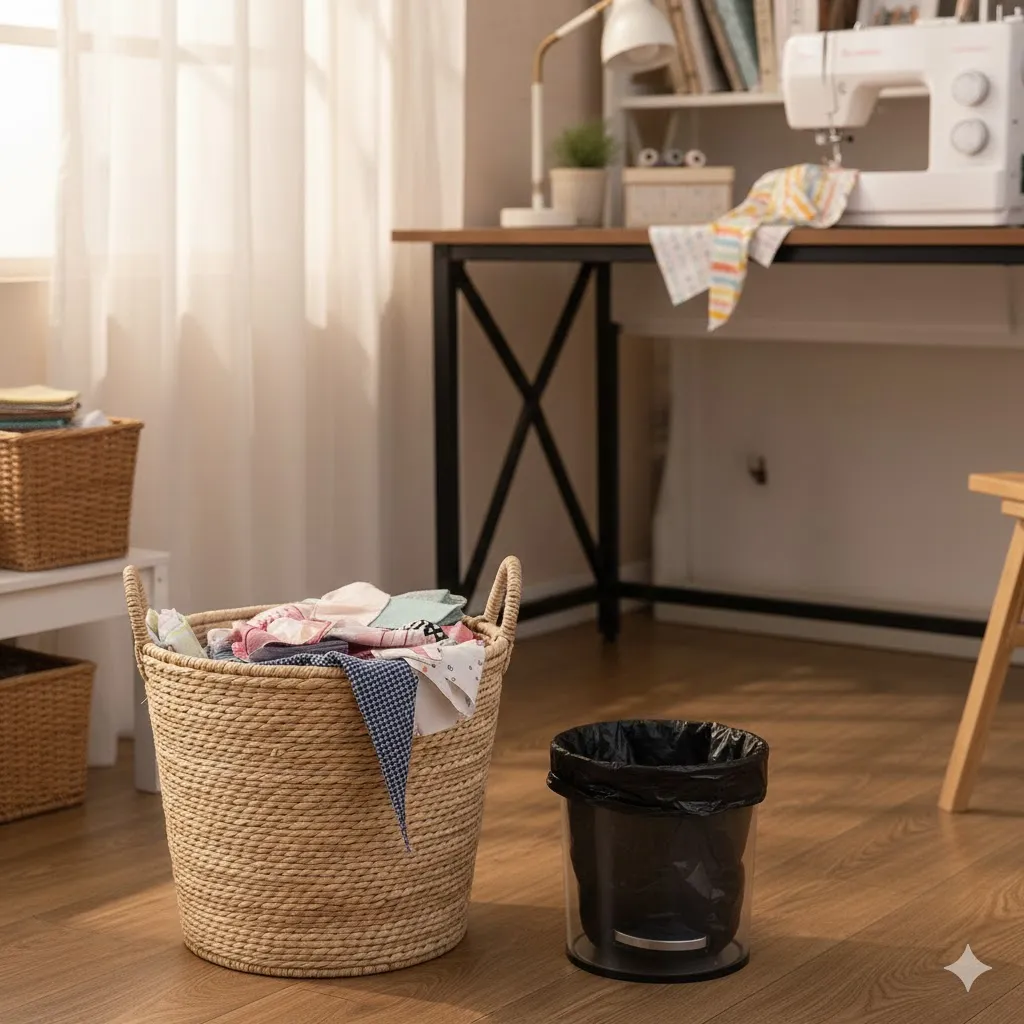
A small bin nearby keeps your space clean and prevents fabric bits from spreading everywhere.
13. Pattern Storage
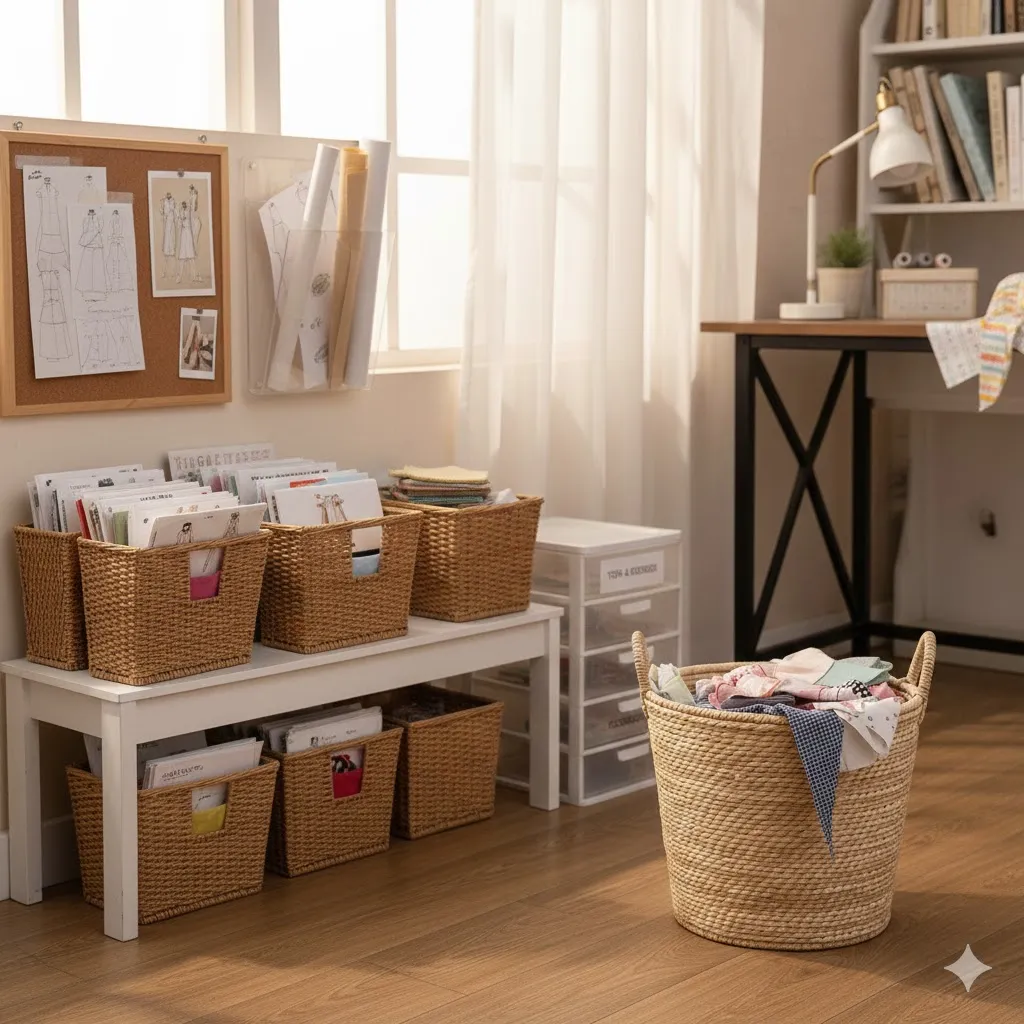
Use folders or clear sleeves to store printed patterns. This keeps everything organized and easy to find.
Conclusion
Creating a sewing area doesn’t have to be complicated. These 13 Essentials First Sewing Space that You Actually Need help you stay organized, comfortable, and motivated as a beginner. With the right tools and a clean setup, sewing becomes easier and more enjoyable. Whether you use a corner of your bedroom or a full craft room, these 13 Essentials First Sewing Space that You Actually Need will guide you toward building a practical and inspiring sewing space.